Lake Tahoe Spartan Ultra

Unlike some of my previous race reports this one is less about the race itself and more about the mental/psychological journey that I went on surrounding this event. I guess that’s one disclaimer. Another one is that this is a long recap.

I didn’t write a report of my experience taking on the Vermont Ultra in mid-September, but if I had the dust jacket would have read something like “After getting pulled for not meeting the time requirements at the final checkpoint of the 2017 Vermont Ultra and with a year to train, Dan arrived at the transition area in 2018’s event more than an hour after the cutoff time, recording a second straight DNF. As the dust settled on the event weekend it was revealed that a combination of inadequate training, obstacle failures, nutrition mistakes, and pacing issues led to a spectacular failure.”

I returned home from Vermont with two weeks to prepare for the Spartan Ultra in Lake Tahoe, which was part of the Spartan World Championship weekend. Understanding that an athlete can’t make any real progress or gains in two weeks but can do a lot of damage via overtraining, my focus was on recovering from the roughly 8700′ of climbing over 15.5 miles in Vermont and thinking through changes I needed to implement for this 30 mile attempt in nutrition, hydration, and gear.

In 2017 I attended the Spartan Tahoe event with a bold plan to run the beast course on Saturday and then the ultra beast on Sunday. The 2017 version of the Tahoe event featured a 17+ mile course and after finishing the Saturday beast in a little over seven hours I knew I had only a slim chance of finishing the ultra beast the following day. I opted to defer that entry and run the beast course again on Sunday. It made sense as I was chasing multiple trifectas in 2017, but it definitely left me with a feeling of unfinished business on this course.

Those two runs gave me a good feel for the course, the terrain, the unique obstacles like the alpine swim, and the elevation which ranged from roughly 6000′ to 8500′ above sea level. I felt I had a reasonably good idea about what to expect for the 2018 course, but after Vermont the impact of multiple DNFs this year really started to weigh on me. I’d come to terms with some of them throughout the year, but even being able to view them as learning opportunities, repeated failure stings.

  • April: Spartan New Jersey Ultra DNF – Training mistakes, not being prepared for the impact of downhill running, and lack of trail training miles due to extended winter weather caused me to make it to the transition area about 15 minutes behind the cutoff.
  • May: Ice Age Trail 50 mile DNF at mile 40 – This was my first attempt at the 50-mile distance and I made some crucial mistakes with clothing that resulted in me getting overheated and dehydrated.
  • June: Titletown Ultra DNF – After running in the 100+ degree heat index for 10 hours, I called it a day in the interest of my health and safety.
  • July: Burning River 100 mile DNF at mile 50 – This was farther than I’d ever pushed before and given the option to record an official 50 mile finish or push on and likely DNF the full 100 mile distance, I opted for the medal.
  • August: Spartan Hawaii Ultra – my plan to test my readiness for Vermont on a less demanding ultra course was foiled by Hurricane Lane. I cancelled the trip the day I was scheduled to fly out (all of the Spartan events were cancelled).
  • September: Vermont – Unlike all the other events this year, I was hit really hard by this failure. I’d been on the course the previous two years and though I knew exactly what I was in for, I just failed to prepare. It’s hard to look in the mirror and admit that you knew what needed to be done and simply weren’t willing to put in the work to be successful.

Leading up to the Tahoe race, a spectator map was released followed by the official course map and some of the inevitable pre-race questions were answered. The beast course appeared to be more in line with the typical distance of 13-14 miles with a roughly 3 mile additional spur for the ultra racers that included a few additional obstacles. In the days leading up to the race more information was provided through a series of videos from the event. The ultra spur would only be completed on lap one (though I must confess that I believed we’d find out the morning of the race that we needed to do it on both laps).

Due both to the altitude of this venue as well as all of the events (athlete panels, speakers, etc.) that were scheduled for the day before the world championship race, my wife and I traveled out on Thursday. After spending a few hours sightseeing and then getting groceries we arrived at our rental condo mid-afternoon. I felt normal all afternoon, but as I was bringing the suitcases up the stairs I noticed my heart rate was elevated and I was breathing a little hard. It wasn’t totally unexpected with the altitude transition, but it definitely gave me pause to think about the challenge that loomed in a few days. I also discovered that I got a minor bloody nose while we were out and about Thursday afternoon and I hoped that wouldn’t be something which would come back to haunt me on course.

Friday was mostly a chill day at the condo with a trip to the venue for a few hours to watch some of the athlete panels and other presentations. At least a little of my hesitation and nervousness was assuaged in the presence of fellow Spartans. For as much griping and negativity as there can be on social media platforms, the energy at the race venues is always positive and infectious. As an admitted fan of the sport it was fun to be in the presence of the top athletes and to speculate on the way things would unfold during the championship event the next morning.

As I was planning for this race I knew that I was not going to run on Saturday in order to maximize my chances for success in the Ultra on Sunday. Rather than just lounging around I decided to spend the day volunteering on course. Even though I’ve completed over 40 Spartan events and had previously volunteered to break down equipment at an event, this was my first time volunteering during an event. I figured it would give me a chance to scope out part of the course, get some more outside time at altitude and provide a front row seat to watch the top elite athletes fly through the course.

Volunteer time

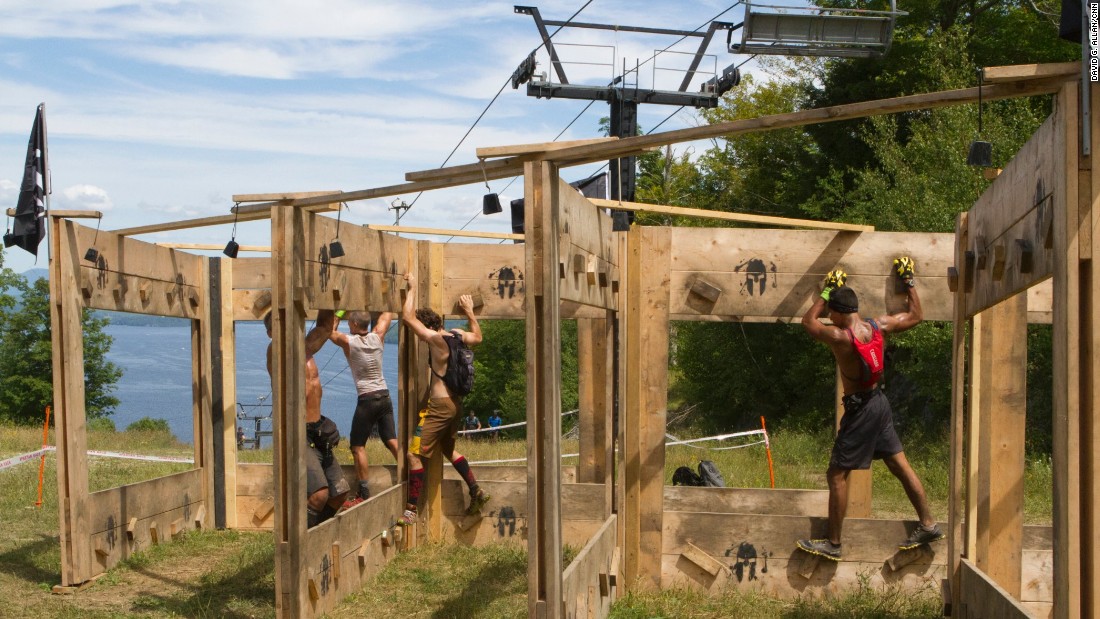
I checked in to volunteer Saturday morning around 6:00 AM and was assigned to the course zone which included all the obstacles on the “soccer field”, a large and relatively flat area of the venue at some of the highest elevations that racers would reach on Sunday at just over 8000′ above sea level. This area included the plate drag, atlas carry, barbed wire crawl, rolling mud, dunk wall and slip wall obstacles as well as a water station. I chose to put myself at the slip wall, which was the final obstacle in that sequence and immediately after the dunk wall. I thought that it would be the most interesting point in that group as it’s the only obstacle in that group which has a potential for failures and I was curious to see how the frigid dunk wall water would affect racers roughly a mile after the swim obstacle.

It was a relatively chilly day with temperatures in the 40s for most of my shift and wind gusts up to and probably over 40 MPH which kicked up incredible walls of dust and dirt for most of the 8+ hours I was on the course.

After helping the volunteers at the water station get set up (Spartan isn’t known for providing tons of instruction to new volunteers so I figured I’d help out as much as I could), I set up at slip wall around 7:30. It was another 30-ish minutes before the lead elite male racers made it to our area and I was stunned at the speed which which they navigated the gauntlet of obstacles in our area, especially the barbed wire crawl. Watching the differences in performance between these top racers and the average “weekend warrior” gave me a whole new appreciation for the level of fitness, skill, and technique these athletes bring to the course. I was also shocked by the difference in performance from the top of the elite field to the tail end of that wave considering that every racer in the elite championship waves had to qualify through various national and regional events. It’s not uncommon for the elite waves at “normal” races to contain “average joes” who simply want to guarantee an early start time, but in this race there was nearly a 30 minute gap between the leaders and the tail end of the wave.

The elite females came through shortly after the tail end of the men’s wave and they were just as impressive. I “might be” a bit of an OCR super-fan and it was really neat to watch all of these ladies flying through the course and getting a chance to shout encouragement their way. Funny story too…just before the lead ladies made it to our area I saw Joe DiStefano, Spartan’s director of sport initiatives, coming over. He asked if I had a phone and when I said that I did he requested that I take pictures of racer headbands and video of burpees in case any top competitors failed the obstacle since there wasn’t an official “burpee cam” located there. I was glad that none of the top female elites or age group racers decided to burpee out of the obstacle too as I never did get information about how to get my videos down to the results tent (over a mile away via a gondola), lol.

Towards the end of the elite men’s wave, continuing through the elite ladies and into the age group wave I started to notice some racers who were having an absolutely terrible time dealing with the cold, especially after coming out of the (really cold) dunk wall. Whether it was due to them traveling from much warmer climates and not compensating for the race conditions with warm clothes or it was just an unexpected reaction to the temperatures, once they got out of the dunk wall some of them simply broke down. As the age group racers started getting to my area and past I began to hear more calls over the walkie talkie to medical requesting assistance for hypothermia cases. At one point mid-morning it got so bad that the volunteer teams at the next obstacle group were rounding racers up and putting them in the aerial tram to get them back down to the festival area and medical staff. It broke my heart to see people who were fully committed to giving 100% in this championship event (and again who had worked hard to qualify for it) have their body completely shut down on them. I’ll probably remember one instance for a long time… a racer who I recognized from the promo video from the 2017 international team race asking me if I could “p-p-p-please h-h-help me tie m-m-m-m-m-my sh-sh-sh-shoe…”. By about 10:30 or 11:00, the medical team had arrived to close the dunk wall for the remainder of the day, just to give the medical team some relief from treating frozen racers and to make sure they could respond to other needs on course.

When my shift ended around 3:00, I took the tram down to the festival. I was windburned, could taste and feel dust and grit in my teeth and was pondering how I was going to attack that course the next day. I stopped to pick up my racer packet on the way out and headed back to the condo.

Saturday evening my wife and I watched the replay of the live stream for the championship race, both to do some last minute race/course recon and also because, again, I’m a huge fan of the sport and I wanted to see how the Spartan season ended up for the top athletes. Knowing that it was going to be an early morning, we ate dinner, finished prep for the transition area bin, and tucked in early for the night.

Race day arrives

The alarm went off on Sunday at 3:30 AM. With the time zone difference this really wasn’t a big deal and I didn’t feel like I was overly tired. Having run several of these events, I’ve got a pretty well defined pre-race routine…

  1. Get out of bed
  2. Use bathroom
  3. Eat oatmeal and yogurt, feed caffeine addiction
  4. Get dressed
  5. Take cold items out of fridge/freezer and complete bin assembly
  6. Put final items into hydration pack
  7. Head to race

The start of the race was in the upper 30s and I knew from the day before that the wind at the higher elevations would likely provide some additional chill. Determined to learn from the Ice Age fiasco, I put on a long-sleeve thermal wicking top and dry fit t-shirt over it plus the required ultra pinnie, thermal tights with shorts over them, ankle height merino wool socks, and a pair of Altra Timps with gaiters. Like most races I wore a thin pair of work gloves and a wide brim hat.

At 5:00 I headed to the car. My wife wasn’t feeling great so I was on my own for the ~15 minute drive to the venue. As I sat down in the driver’s seat, the cumulative mental impact of all 2018’s DNFs hit me hard. It’s amazing how negative your subconscious can be in moments like this, when you start telling yourself that “if you simply go back up to the condo it won’t be a DNF. Why bother going through all of the pain, the cold, the effort when you KNOW this is just going to be the latest in a string of events you’re not prepared to execute?” True story. It’s the closest I’ve come to abandoning ship on this journey and it took a moment to realize that I needed to approach this just like the rest of the event. Don’t focus on what’s going to happen hours from now, just focus on the task at hand. Drive to the venue. And so I did.

Once I arrived onsite, I just focused on what I needed to do next to stay out of my own head. Park the car. Get your gear on. Get your bin to the transition area. Move around to warm up. Listen for announcements from the race staff. I was hoping to see some people that I knew from various online groups but in the pre-race darkness I never did find them. While I waited for the start time to arrive, I paced around the start area.

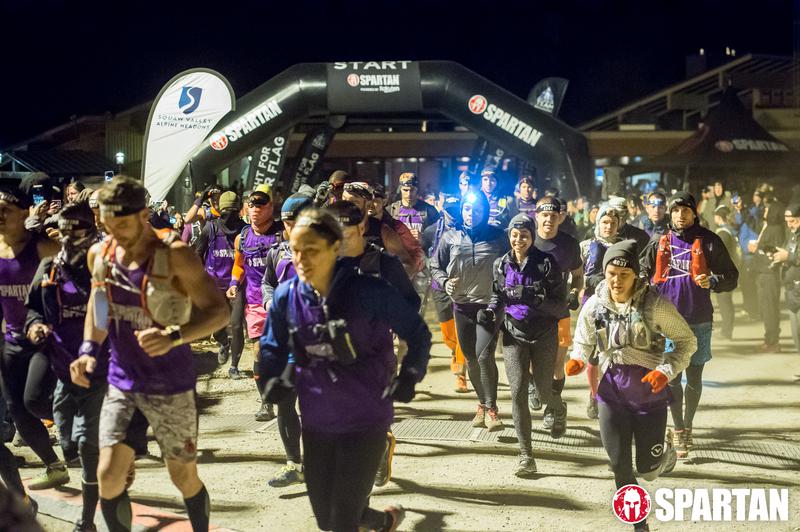
As is fairly typical for these events, the first elite wave started a little late. I don’t get too worked up about it as it’s fairly typical for Spartan ultras and it’s totally out of my control. I try to appreciate the effort needed to ensure that obstacles are properly staffed with volunteers who are on course prior to the 6:00 AM start of the elite ultra participants, plus coordinating that the medical teams are in place and ready.  As we were waiting for the start, we got some final pre-race information from the staff, specifically about the water obstacles. They let us know that the medical teams were monitoring water temperature, air temperature, and wind and had a formula to determine if conditions were safe for those areas to remain open. As of the race start, the swim and dunk wall were open but if they were deemed unsafe that decision would be made before the first racers reached it so it would be fair for all racers.
Lap 1

Our age group wave ended up starting about 10 minutes late at 6:25. It was still dark out so I had my headlamp on. The first section of the race ascended out of the Olympic village about 1000′ in the first mile. The trail surface in this first part was mostly fresh wood chips, which offered just enough of an unstable surface to be notable. After a few minutes I arrived at the first obstacle, the hurdle. As I flipped over the first hurdle I felt my dry bag slip out of the outside holding area of my hydration pack and it smacked me in the side of the head. After the second hurdle I had to stop for a moment to figure out a better way to rig it and ended up just clipping it onto the outside of my pack. Securing it with a carabiner ensured I wouldn’t lose it, but it was flopping around and constantly hitting me in the side, not really helping my state of mind.

The wood chip ascent (seen mid-day)

Roughly 35 minutes after I started, I made it to the Hercules Hoist and was shocked to find that the bags were light enough that I could complete the obstacle without needing to sit down. I’ve been to other races where it feels like you’re trying to lift a VW and while I’ve never failed this obstacle there are times when it’s definitely been tougher.

I spent much of the next mile wondering about how the swim would go. It was still chilly even though the sun had come up. I remembered wading into the water in 2017 and it taking my breath away. I silently chastised myself for not following through on swimming lessons. I then tried to shut all of that out and feel gratitude for my fitness, which allowed me to attempt the event, as well as the financial freedom to travel and run in this incredibly beautiful area of the country.

In terms of natural beauty, this is probably my favorite Spartan venue.

As I rounded the corner before the swim I noticed first that there were no racers in the water and next the volunteer directing racers past that obstacle. Apparently the medics decided that it was too cold and closed the swim. As much as I like a challenge I couldn’t stifle a cheer inside as I felt all the “what ifs” surrounding being cold and wet being filed away. There was still the possibility of a cold immersion in the dunk wall coming up but that would be seconds, not minutes and it was something we’d just have to deal with later.

After running past the swim, the next obstacle was the bucket carry. This was in the same position as it was in 2017 so I knew I was in for a grind as we went down and then up the sides of the half pipe, a quarter mile in total. As of 2018, Spartan standardized the bucket carry by pre-filling and capping all of the buckets which not only saves time for racers but helps by creating some alternate ways to carry the bucket. The trip down wasn’t too difficult save for some sketchy footing and I was able to make it all the way down without stopping. For the trip back up, I employed a method for breaking down difficult tasks that works well for me. I committed to taking 20 steps. At the end of that interval I felt I could go longer I did another 20 and if not I took a short break (30 seconds ish). By doing this I was able to complete the ascent with two quick breaks and with enough energy to be able to run afterwards. For me part of the riddle of these long events is the constant tension between moving with purpose and getting through the course as quickly as possible but not going so hard that you outrun your body’s ability to keep up, leaving you unable to run later in the race.

After the bucket it was a quick run up to the soccer fields to complete that group of obstacles. As I worked my way through this area I noticed that the dunk wall was closed so I wouldn’t have to contend with being cold and wet at all. Again, no tears.

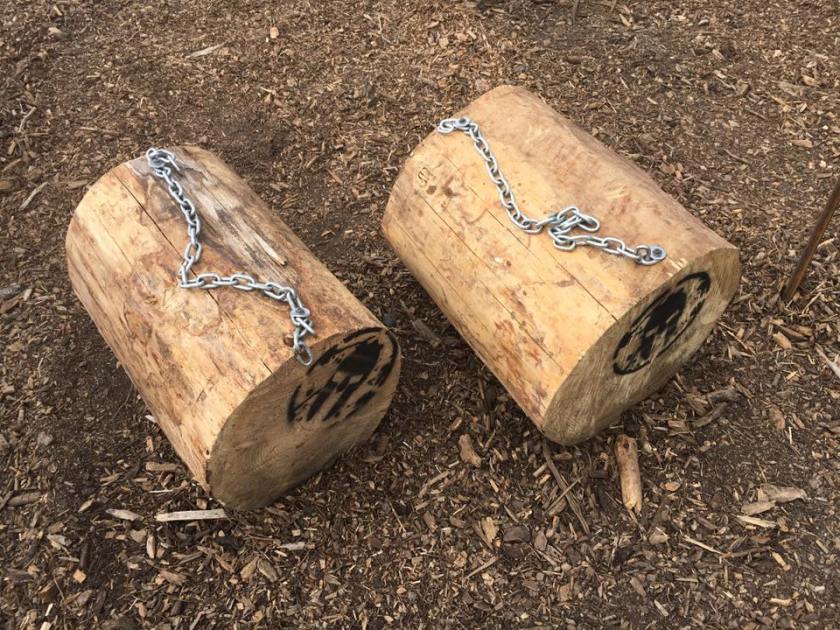
After leaving the soccer fields, we were directed to the ultra spur, which we would need to complete on the first lap, and the ultra-only obstacles. Almost immediately we came to the log carry. Based on previous Spartan logs (well maybe not the West Virginia 2017 log), I thought this would be a throwaway obstacle. LOL, nope. Seriously I don’t know where they found these things, but they were huge. They were heavy too but that was less of an issue than the awkwardness of having them smash into your shins as you carried/dragged them across the wood chop surface from flag to flag and back.
After the log we had a nice long section of trail leading up to the roughly half-mile sandbag carry which went close to the top of Emigrant Peak and the highest elevation of the race at roughly 8500′ above sea level. It was still a bit cool and windy, but I felt decent without much impact from the altitude.

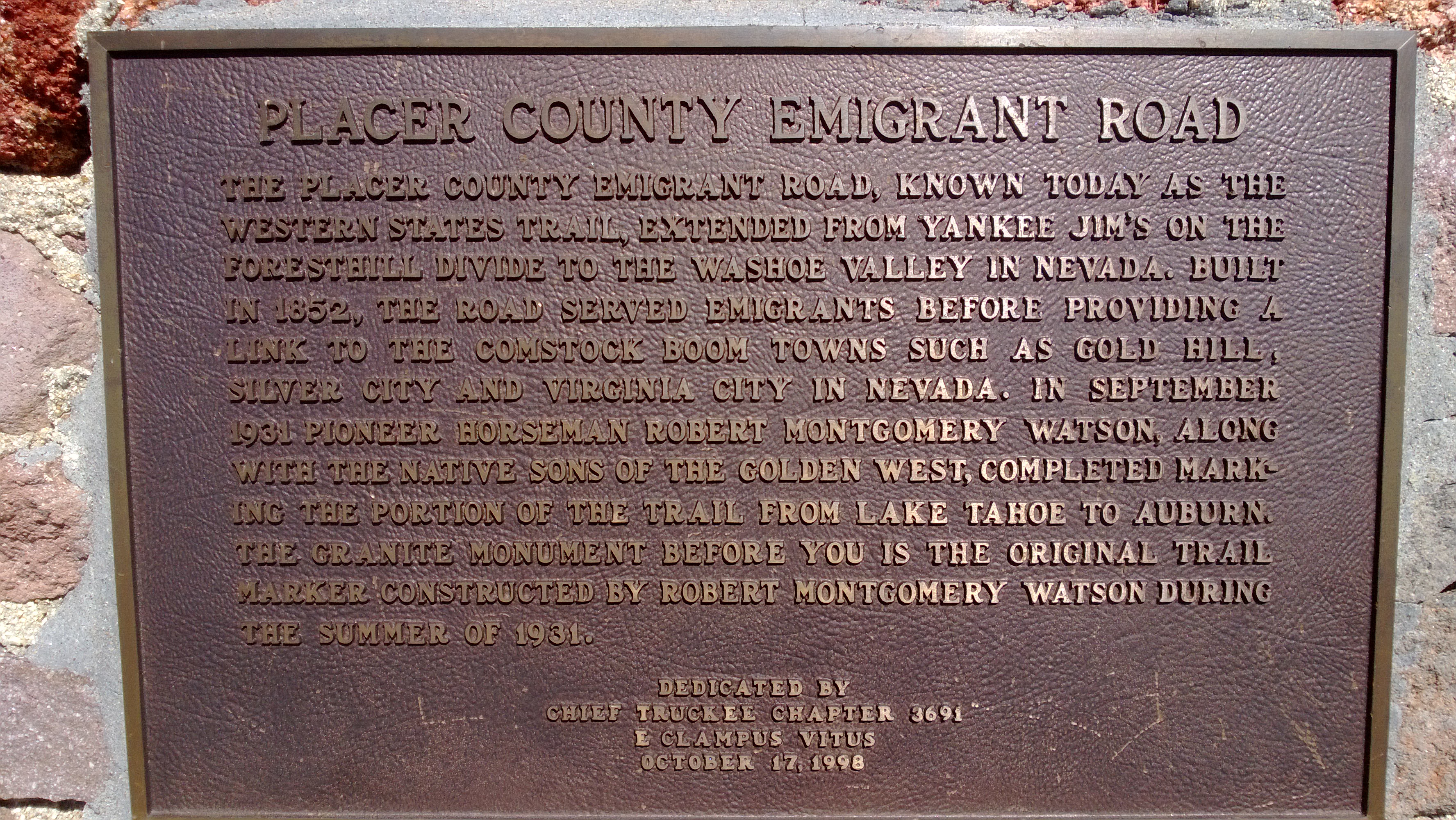
The sandbags for the ultra carry were sand-filled polypropylene bags which I think weighed about 25-30 pounds and really weren’t a big deal. I was able to position it just behind my neck in a way that only required one hand to keep it steady. The incline through much of this was gradual and not terribly steep so I was able to keep a decent hiking pace. At the top of the sandbag carry we ran by a small….shrine….which I later found out was Watson’s Monument on the Western States trail. The view from that point was pretty awesome even with the overcast weather. In that moment looking at the monument I couldn’t help but think of the shrine at the top of Everest. Having now climbed to the highest point on the course I touched the monument and thought “well, it’s all downhill from here…sorta”. After jogging most of the downhill I handed off my sandbag to an approaching racer and continued on.

As I was reviewing the map prior to the race, the 10 foot wall was on the list of obstacles I would likely fail. I’m terrible at walls and often have trouble with the standard 8 foot version. As I approached it on the course I was delighted to see that it was a ladder wall that could be scaled and not a traditional solid wall. Bonus. Right after the wall was the timing mat for the ultra loop. At this point I was 2:32:57 into the race with roughly seven miles complete. I’m sure I did some math but refused to believe I was in “good shape” and kept hustling. I’d fallen prey to slacking off in other races when I saw my early pace was “good”, then paid the piper later when it inevitably slowed due to fatigue.

Not me but wanted to add a pic of the ladder wall

Shortly after the wall we joined back up with the beast course and racers completing the beast. Lots of them gave encouragement to those of us running the ultra. I failed the next two obstacles (spear throw and Twister) and did the required burpees before starting the long descent back towards the festival area. I noticed during the descent that the cloud cover had burned off and it was definitely warming up and I hoped that wouldn’t cause any issues.

It was only a short section of trail before we ended up at the next sandbag carry. I was certainly glad that for the ultra we only had to carry one 60# sandbag up and down the hill (the elites had a double the day before). It still amazes me how much of a difference adding this much weight on your back has on your perceived effort and heart rate, especially when climbing. I pulled over twice on the uphill to catch my breath, I think in part due to the elevation, and hit the timing mat at the top at 3:07:01 and jogged the downhill before dumping the bag off for some other poor soul.

This is Sparta…

The trail section leading back towards the festival area was fairly technical (lots of loose rocks and uneven terrain) but even so I just couldn’t find a comfortable stride and again worry set in. This was ideally a section of the course where I was going to make up some time to help ensure I would stay ahead of the cut-offs I was dreading and here I was, walking and shuffling down the trail. I did the best I could and eventually arrived at the Olympus obstacle (fail! burpees!). Even on the flat ground in the festival area I felt like I had to walk. I’d been hydrating and following my food plan but my legs felt like lead and I just had no gas. To say this was worrisome would be a real understatement but again, I just tried to focus on the task at hand. Get to the next obstacle or trail marker with the best possible effort, whatever that is. Let everything else figure itself out.

I completed the A-Frame climb and the rope climb successfully before failing the next two obstacles in the festival area (Tyrolean Traverse and Ape Hangar). The race then left the festival area where we completed the tire flip (successful but hard) and a combo obstacle of monkey bars and a Twister section (fail). I crossed the timing mat here at 11:11 AM with a total elapsed time of 4:46:59 over something like 12.4 miles. The first cutoff at 1:45 PM was the time racers needed to be out of the transition area. I knew this was still one big climb and descent away so I tried to hustle as much as I could. I think it really helped to have seen much of this course in 2017 so I knew what I was coming. The final push up the next climb on the course was crazy steep, probably 30-40% and over a bunch of loose scree rock so footing wasn’t always certain. At points I ended up needing to reduce the work to those 20-step intervals again and not look up to the top of the climb.
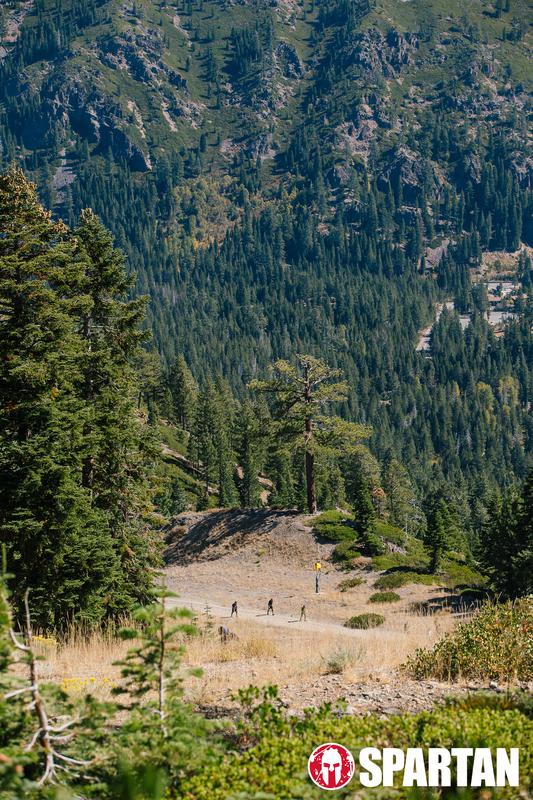
Spartan placed the Stairway to Sparta obstacle at the top of the climb, which gave racers a pretty nice view of the surrounding area. After that it was a few miles of trail and one 8′ wall (fail! burpees!) before we arrived at the transition area. When I emerged from the trail into the final switchbacks I took a peek at my watch and calculated I would hit the transition area about an hour ahead of the cutoff time and for the first time all day I felt real hope. I’d spent most of the first lap trying to block out everything except the trail section or obstacle directly in front of me for fear that I’d enter a negative spiral and even so found more than a few spots where deep down I was doubting that I’d have a successful finish. But now I knew that I was going to have roughly eight hours to complete my second lap which would be about three miles shorter since the ultra spur was lap one only. While it certainly wasn’t a “given”, I knew that if I kept moving and avoided something like an ankle sprain, I wouldn’t have to freak out about the cutoffs.

Just before I entered the transition area a staff member stopped me and said I needed to move my bin from the place I’d set it when I arrived before dawn to the opposite side of the transition area. I guess they were using this as a visual tracker to see how many racers were through transition. Since this was a staff member rather than a volunteer, I took a second to ask if the water obstacles (swim and dunk wall) were re-opened and got confirmation that they weren’t. This allowed me to make some tweaks in transition.

Bears photographed on course (center), looking for picnic baskets in the TA?

The transition area is where many ultra dreams go to die and experienced racers preach about needing to get in and out as efficiently as possible. Some say that you should avoid sitting down at all. For some racers, the comfort found here is enough to deter them from getting back out on the course to finish what they started. At this point, Spartan could have put a hot tub and steak buffet out in the TA and it wouldn’t have mattered. I knew I was going out to give my best effort to the finish. I allowed myself 15 minutes to sit, eat, re-pack, change, reply to some texts, and get out for the second lap. The healing and motivational power of a PB&J, a Snickers bar and a Red Bull in situations like this cannot be understated. Even though the temperatures had warmed a bit I ditched the second shirt I was wearing but decided against taking time to change clothes other than socks. I’ve learned the importance of caring for your hooves in these long races and was confident that the two minutes I spent applying a fresh layer of Foot Glide and dry socks was time well spent.

Lap 2

I left the transition area 16:11 after I entered. Considering that included the time to find and move my bin I was happy with it. The brief time off my feet coupled with some food felt amazing and I was in really good spirits heading out on the second lap. My pace up the first climb was, as expected, a bit slower than lap one but I never had a sense I was going to cramp or run out of gas. All of the open beast heats had started by the time I started out on the second lap so I only saw a few other racers, mostly other ultra racers, as I started the push to the finish line.
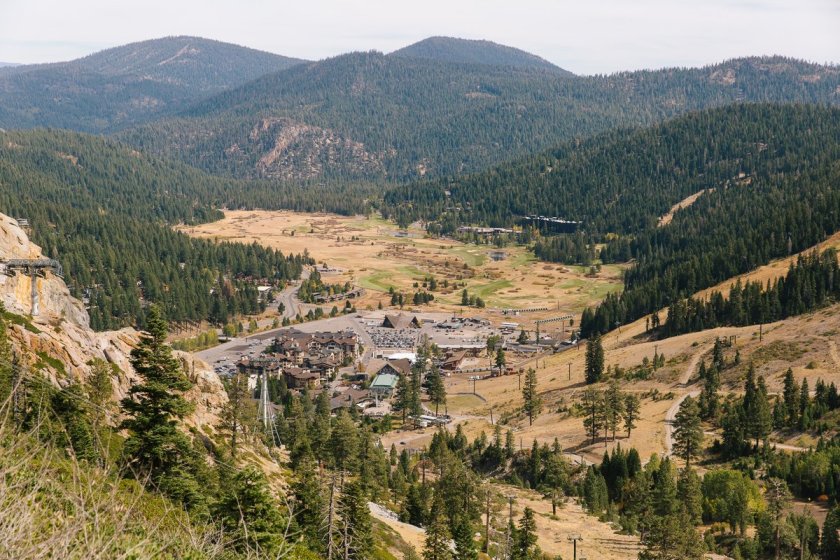
A view from the initial climb looking down on the Olympic village

Herc hoist – check. Inverted wall – check. Swim – still closed. Bucket brigade – second verse, same as the first. I was happy that my obstacle performance overall was still decent at this point.

Following the collection of obstacles in the soccer field, the trail section up to the spear was a slight decline and where I struggled to move quickly on the first lap, I now felt relaxed and was able to enjoy the run. After hitting my spear (not so silent cheer), I made it farther on Twister than I ever had before before falling off and did the required burpees with a smile.

After making it through the sandbag, I was able to relax and make way better time on the downhill sections than I had in the first lap. I’d find out later that my split from the sandbag to the next timing mat at the monkey bars was 19 minutes faster on the second lap.

As I came back into the Olympic village area I got a great surprise when I saw my wife waiting for me by Olympus. She was feeling better and had grabbed an Uber to the venue. I hadn’t expected to see her at all during the race and her presence gave me another boost of positive energy. I still failed Olympus (but I had someone to talk to while doing burpees), Tyrolean Traverse (sigh) and Ape Hangar (lol) on the second lap but stayed positive. I did complete the rope climb so at least I avoided those burpees.

I left the monkey bars for the final climb just before 5PM with the sun starting to descend and knew that it was going to get harder to see and colder once the sun went down so I tried to make my best possible time.

After the scree climb and Stairway, it was all downhill to the finish. I knew the finish was mine and enjoyed the feeling as I cruised down the trails, taking time to look around again and appreciate the scenery, not knowing when or if I’d be back to see it again. I used racers on the trail ahead of me as motivation and picked them off one by one. I’m never really racing against anyone but sometimes those little games provide an extra boost when the legs and mind are tired.

Just before emerging onto the final switchbacks, my watch buzzed with a text from my friend Matt back home encouraging me to push for a sub 12-hour finish. I hadn’t really considered that but made an effort to see if it was possible. As I neared the end I began to feel emotion rising, something I hadn’t really dealt with since the Vermont Spartan Beast in 2016. There’s something incredibly powerful and affirming about taking on something you aren’t sure that you can accomplish, pushing through that doubt and the effort that the event requires to emerge victorious. After all of the DNFs and resulting negative emotion, I’d done it. I’d taken on something big, something that scared me, and proved on that day I had enough in me to get it done.

Just before the finish I tried (and failed) the final two obstacles and then crossed the finish line. At that moment the full weight of the day and the release of 2018’s DNF demons hit me full force and I broke down completely.

The sweetest feeling

After taking a few minutes to pull myself back together I headed over to the results tent to grab my precious…. oh sorry, I mean the finisher’s buckle and the medal I’d earned for completing four Spartan trifectas in 2018.
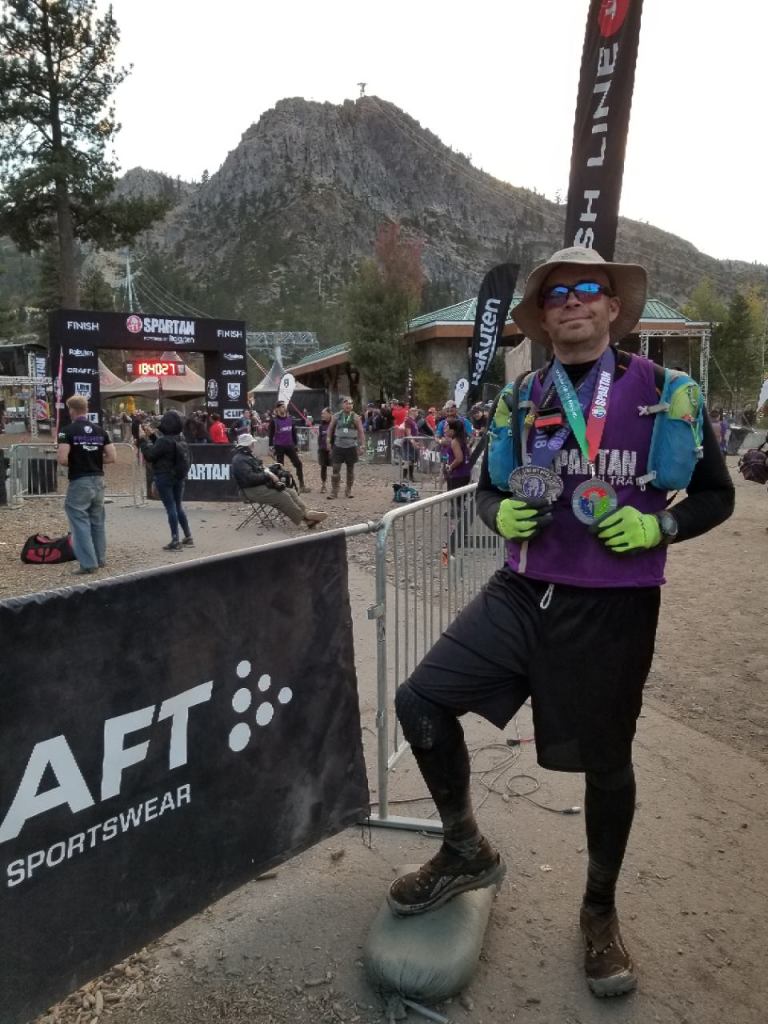
Epilogue

I’m completing this race report almost three months after the event and I can still remember much of it in vivid detail. What strikes me most about this race in hindsight was, as I mentioned at the top, how much this was about the mental battle starting long before the timer was running and the profound effect that successfully completing this event had on me in the days and weeks following. I noticed an almost immediate shift in my attitude and demeanor at work and at home, with significantly better energy and that has re-affirmed my commitment to taking on some big challenges in 2019 (going back to correct some DNFs and a few new things too).

Burning River Endurance Run

Image result for burning river 100 logo

When I built my 2018 race calendar starting in December of the previous year, I decided that I wanted to take a shot at completing a 100 mile race. My logic was that the progression of 50 miler (Ice Age) and then 100k (my goal in the Titletown Ultra) would help me figure out gear, pacing, hydration, nutrition and be a natural ramp-up in training to this race (and certainly I’d finish those without issue…). After looking at the Spartan events that I had penciled in, I figured that the ideal time to add the “hundo” to the calendar was late July. This afforded me enough time to train and then to recover before some of the heavy duty OCR events on the schedule from late August through the end of the season.

I decided that my first 100 attempt would be the Burning River Endurance Run. It fit the timeline, was a drivable distance from home, and eliminated the challenges of mountain running and extreme altitude. Honestly I figured that the act of running 100 miles would be tough enough without turning the difficulty knob up to 11 on my first try!

Preparation

I knew going in that this was going to be both physically and mentally tough, but if I didn’t get my race prep done right I would have…

Image result for no chance meme

A few weeks out from the event I began prepping and trying to take lessons from the failures and issues of past ultra races. The race staff did a phenomenal job of assembling an informational packet for all participants which described the course, laid out the aid stations and answered pretty much any question a racer could come up with.

One of the biggest lessons I brought forward from last year’s Mosquito Hill run was that you must take care of your feet during an event like this, addressing any issues like blisters or hot spots as soon as possible. Not only does this allow you to move through the race efficiently, but it reduces the likelihood of long and painful foot rehab post-race. I had less than zero desire to repeat the three-week blister healing that I experienced after Mosquito Hill with this race. For this race I made some gear changes, switching away from compression socks to compression sleeves and merino wool ankle socks, and planned to stop roughly every 20 miles to inspect my feet and change into dry socks if needed.

Another critical element in this planning was figuring out the logistics for hydration and nutrition. I’ve found that my body needs roughly 300 calories per hour to perform for the length of an ultra distance race and depending on the temperature and humidity I can easily consume a 2 liter water bladder in less than 90 minutes.  Logistically, this race offered aid stations roughly every 5-6 miles so racers were never very far from supplies or help, but I prefer to stick to food that I’ve tested in training to reduce the likelihood of an upset stomach or other GI issues. This meant coordinating resupply locations. The rules for this race stated that a racer’s crew could only assist at designated crew aid stations, not along the course or at specific aid stations that were not large enough to handle the vehicle traffic.

I took this information and created a spreadsheet with mile markers, aid stations (with crew access info), estimated times, aid station addresses/GPS coordinates, and map links, a portion of which is below.

BR_Aid

From here, my crew chief/master planner/loving wife added some information she’d need with drive times between aid stations and we planned out when she would check into the Airbnb we had booked for Saturday night.

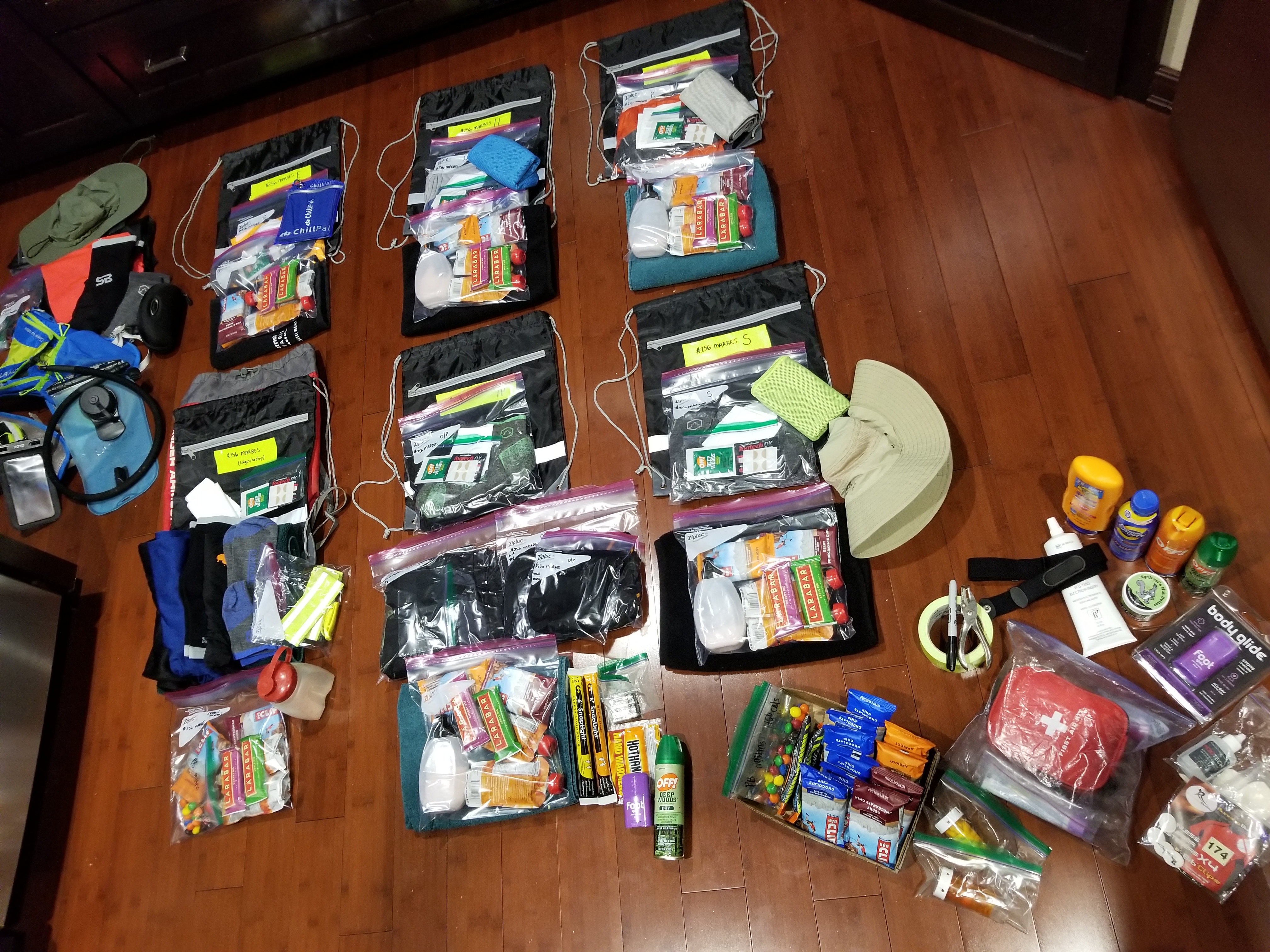
To eliminate the possibility of not having the supplies I’d need, we decided that we would make drop bags for each aid station which offered that option. This allowed us to plan for her to get some sleep Saturday night and ensured that if she couldn’t make it to a planned crew stop I could still continue as planned.

20180726_100014.jpg

From the Ice Age 50 in May, I knew that mistakes in gear and pacing early in the race can really torpedo your chances for success so I gave a lot of thought to this. As a bigger guy I have to deal with the reality that these events place a lot of load on my hips, knees and ankles. In addition to focusing on good running form, I decided to experiment with a more cushioned shoe than I had been using in my OCR events or other shorter trail runs. Several weeks before the race I purchased a pair of Altra Timps and had a very favorable response to them. I definitely felt that the extra cushion would help my joints out later in the race. As the event got closer the weather forecast proved to be excellent, so I didn’t have to make any other significant changes from what I’d normally wear.

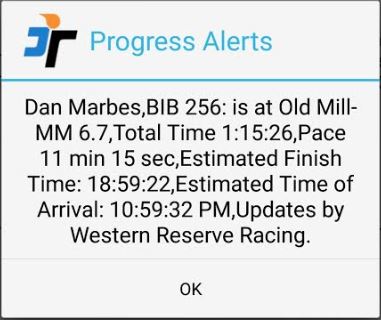
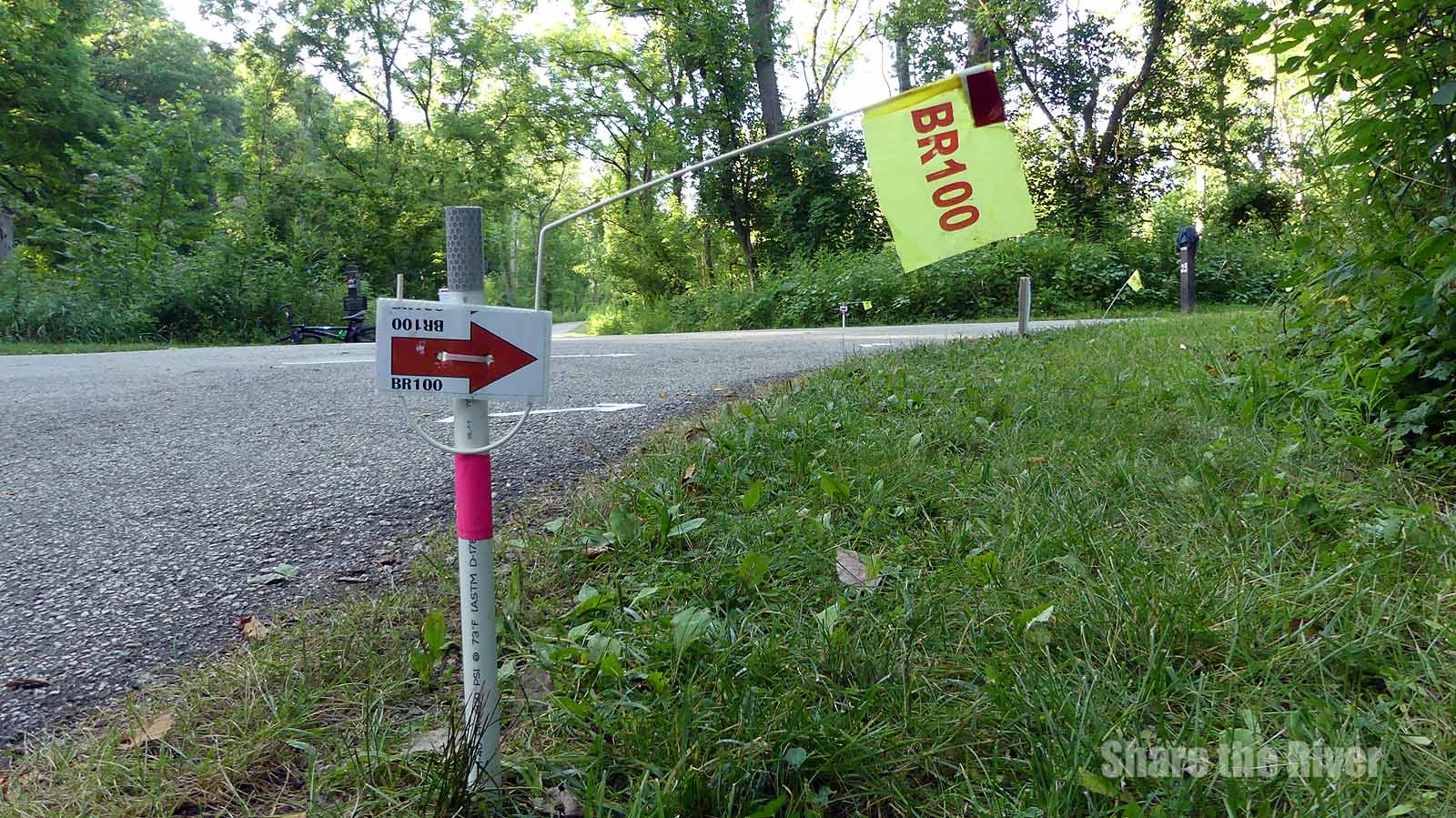
The pre-race packet mentioned several times that the registration fee for the event covered use of the RaceJoy application from a smartphone. The race team noted that the course would be extremely well marked but since this race was a point-to-point course using multiple public parks and roads, the possibility of a missing or vandalized sign could not be eliminated. As a racer, the RaceJoy application would track you and provide status updates to anyone who subscribed to your “feed” and, more importantly, would alert you if you got more than roughly 200 meters off the course.

Friday

The day before the event we left home and drove the roughly eight hours to the finish line area in Cuyahoga Falls. While there was an option to pick up packets and bibs the morning of the race, I always prefer to remove as much of that from race day as possible and simply focus on getting ready for the race.

We arrived in time to get my packet which included the bib, a nice tech style shirt and a few other goodies. We attended the rules meeting at 3:30 and headed for our Friday night lodging closer to the start line.

20180727_143007

Race day!

With a 4:00 start time for the 100M event, race day started pretty early. The alarm went off at 2:00 and as planned it took about an hour to get up, get dressed, eat, and get the car packed. I’ve always found the experience of driving through major cities around this time interesting (Cleveland in this case). On a major four or five lane highway, there might be a half-dozen cars in view. Definitely less crazy than midday.

We arrived at Squires Castle at around 3:15 AM, ahead of the shuttle bus bringing racers who were staying at or near the Sheraton at the finish line. It was dark and cool and quiet, but that changed pretty quickly once other racers started to arrive. Pro tip: if you arrive just a little bit earlier than the shuttle you can avoid this line for the porta potties!

20180728_031929.jpg

Leading up to the race day, I wondered if I’d be nervous as the 4:00 start approached. I’ve done a fair number of long races but the first shot at something new always seems to bring heightened excitement. Surprisingly, I really didn’t have a lot of excess nervous energy.

20180728_034742.jpg

Just before 4:00 we took a few minutes for the National Anthem and with a ten-second countdown, we were off.

Start-RaceJoy

Start to Polo Fields (Mile 0-11.7)

Knowing that my overall pace would place me at the middle to the back of the pack, I intentionally let the faster runners pass me and made sure to stick to a relaxed, easy pace as we ventured out onto the streets around the start line. While the humidity was a little high, everything felt good. I decided that I wasn’t going to use headphones until much later in the race, so I just enjoyed the sounds of the morning and some of the conversation going on around me. The terrain was mostly flat with a few short inclines that everyone walked and a few downhills that I ran at a comfortable pace.

I arrived at the first aid station at Old Mill at 5:15 AM, exactly when I had planned. Since it was cool out I hadn’t used much of my water so I decided not to stop and just kept on running.

Aid1-RaceJoy

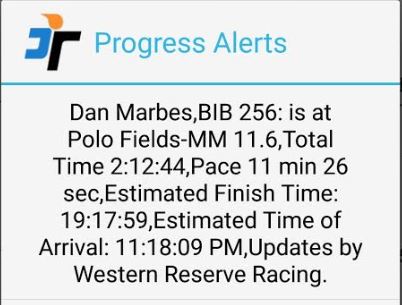
The next five miles of road were pretty flat. Everything still felt good and I arrived at the second aid station at 6:12 AM, three minutes ahead of schedule.

PoloFields-RaceJoy

20180728_061302

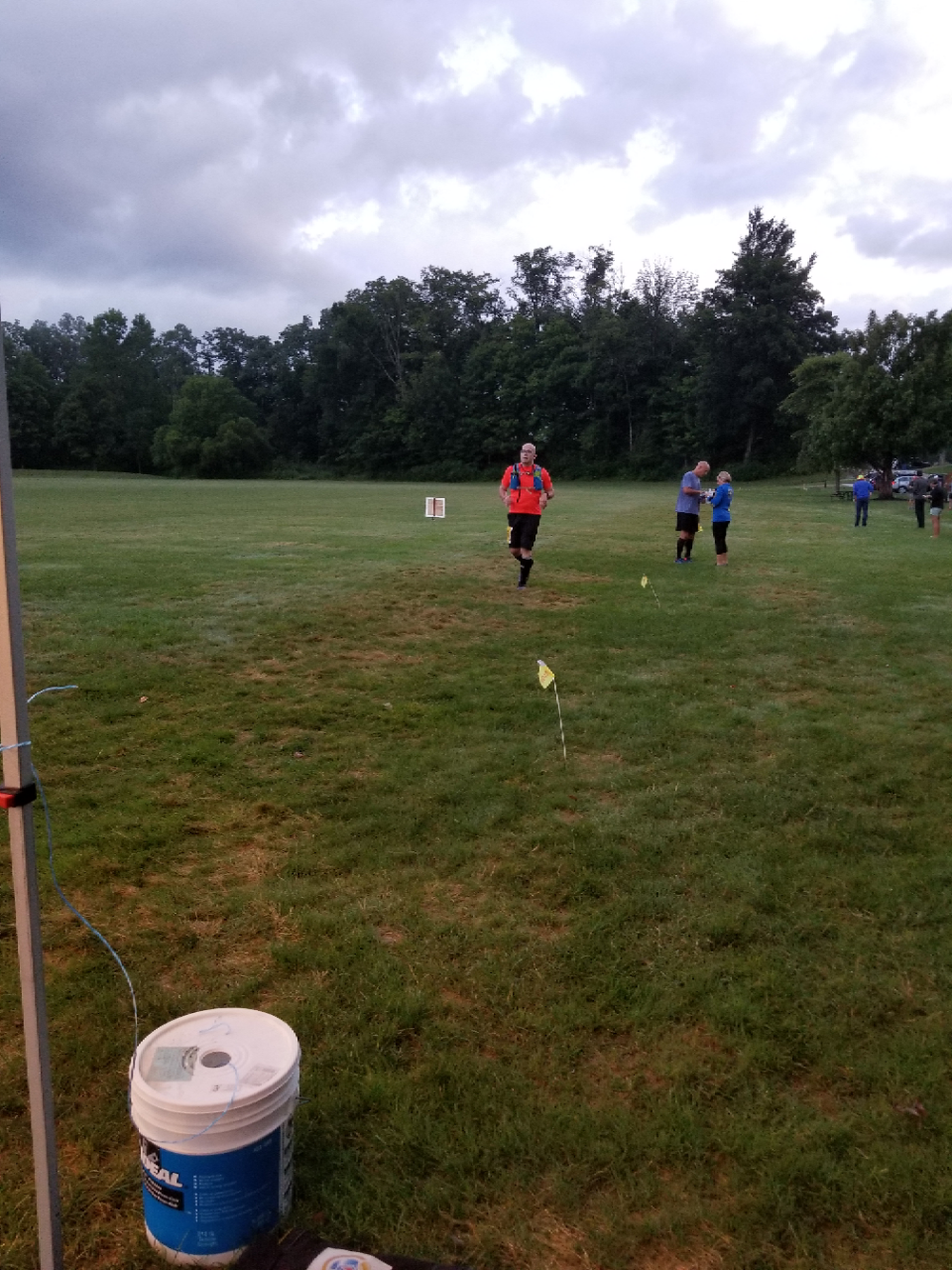
The plan for this aid station was pretty simple: drop off my headlamp, switch from my clear glasses to my tinted glasses, top off my water bladder, grab two more food items, and go. With everything going according to plan, I was in and out of this aid station in about three minutes.

Polo Fields to Shadow Lake (mile 11.7-20.7)

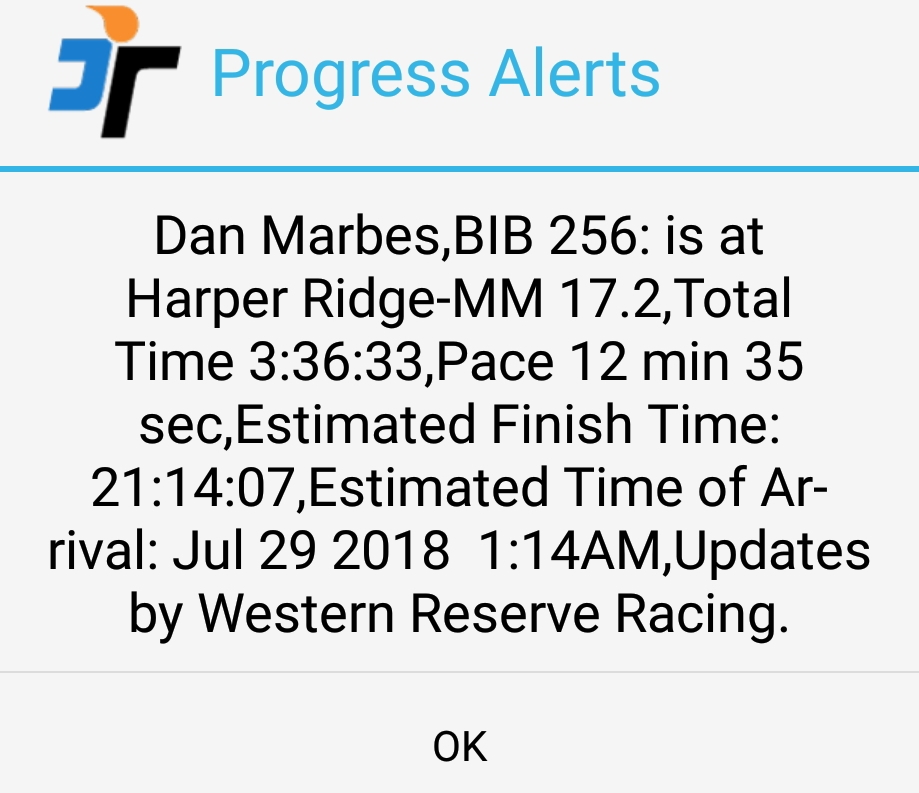
Just after the Polo Fields aid station, the terrain changed from paved road to bridle (horse) trail. While there wasn’t much technical terrain at this point, the trail did require a bit more active attention. In this section there were several water crossings that were no more than ankle deep but for some reason the wet feet sent me into a mental tailspin. One weird thing (to me) about ultra endurance events is the various ups and downs that you experience throughout the event. In this case, I’m not sure why I got into this mental funk but I had to work pretty hard to focus on all the things that were going well. By the time I got to the next aid station at Harper Ridge (only six minutes behind my estimated pace), I’d gotten my head right and was focusing on the task at hand. I stopped just long enough to top off my hydration pack and grab a small cup of Mountain Dew (hi my name is Dan and I’m addicted to caffeinated beverages…)

Screenshot_20180902-170204_RaceJoy

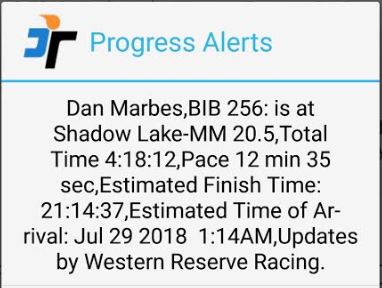
The next three miles to the Shadow Lake aid station were pretty uneventful. I did spend some time chatting with another racer about travelling and frequent flyer miles which was a nice way to pass the time.

Shadow Lake - RaceJoy

Coming into Shadow Lake I avoided being eaten by the T-Rex and made my way over to the crew spot that was waiting for me. Seriously, this race had some FUN aid stations.

The plan for this stop was to take stock of my foot condition and address any issues. Even with the few water crossings my feet were in really good shape. I applied a fresh coat of Foot Glide and put on dry socks. I took an opportunity to change into a dry shirt as well.

It was about time to eat so I took just a few minutes in the chair to put down some food. After 20 miles I was only 18 minutes behind my planned pace which felt great, so I wasn’t worried about a few minutes here and honestly it felt really nice to get off my feet for just a little bit. I knew the next time I’d see my wife would be in a few hours as the next three aid stations didn’t allow crew. I grabbed some food refills for the stretch ahead, made sure my pack was full, and headed out.

Shadow Lake to Meadows (mile 20.7-37.4)

In any event like this, things are going to happen. For me the first one of these “moments” happened between Shadow Lake the next aid station at Egbert. By this point the pack had spread out a lot and I was more or less running on my own. This part of the course had us moving back and forth from some paved bike paths to single track trails and somehow I missed a turn. While running down the bike path I started to notice I wasn’t seeing any course markers or racers (always a bad sign) and after a few minutes I noticed racers that had been just ahead of crossing the path I was on. A number of them yelled out that I’d missed a turn a ways back.

I like to think that moments like this show your character. I stopped and realized that I had a choice to make. I could either turn around and run back up the bike path until I found out where I got off the course or I could wait until no other racers were around and jump back onto the course where I was. Thankfully the decision only took a microsecond and I was jogging back up the path. I figured that the error cost me maybe 10 minutes and a 1/4 mile in each direction. Once I found the turn I missed I also realized why the RaceJoy application never alerted me. Turns out that the actual course ran exactly parallel to where I had gone and I never exceeded the 200 meter threshold required for the warning.

WrongTurn

I noticed that as this was happening and in the moments afterwards, I was mentally unfazed. These are the kinds of errors that have the potential to cause one of those crazy emotional lows and I was glad this one didn’t break me down.

BR100-flag

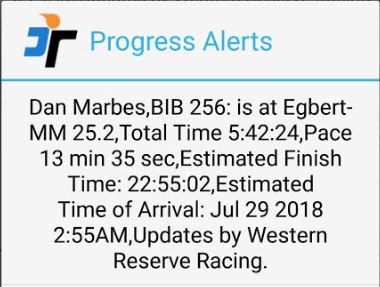
I arrived at the Egbert aid station at 9:42 AM, 42 minutes behind the pace I estimated. I still felt pretty good and wasn’t worried about this since I could account for most of this time with the wrong turn and the extra time I took at Shadow Lake.

Egbert-RaceJot

This aid station had a super fun Margaritaville theme with music playing and a real party atmosphere.

Image result for egbert aid station

As fun as this was, I knew that the temptation to linger here would be significant so I simply topped off my hydration pack and rolled out.

Image result for it's a trap

The next aid station was just four miles up the road at mile marker 29.9 and it put the biggest smile on my face. After nearly seven hours of racing and dealing with the inevitable soreness and mental fatigue, I turned the corner towards the Alexander Road Aid Station and was greeted by a raucous chorus of cheers and support from the team there, representing Black Girls Run. Their infectiously positive attitudes infused me with a ton of positive energy, and the sponges full of cold water they squeezed over my head and down my back felt amazing!

AlexRd-RaceJoy

At this point I decided to take two Tylenol, just to dull some of the soreness and tightness. I knew I wasn’t going to take any Advil or other NSAIDs to avoid putting any more load on my kidneys, but taking the edge off the beating I was putting on my body helped a lot as I moved on.

After two short miles I arrived at the Frazee aid station which was simply a table set up with water and cups. I grabbed one quick glass and rolled on.

RWB_1837

Much of the next 5.5 mile section to the Meadows aid station was a flat crushed limestone bike path. It was nice to allow the mind to focus a little less on the terrain and just run but the trade-off was no tree cover in the warming temperatures of the early afternoon. I was still able to run most of this with occasional walk breaks and felt pretty good about that after 30+ miles. Right around mile 35 as I was coming up to a bridge crossing, I heard a train whistle and as I came around the corner which led to the bridge I saw that there was a passenger train stopped at the station. Unfortunately for me the race path went directly across those tracks. A few of the runners just before simply took a right and ran around the front of the train. Since I had no idea how long the train would be there I followed suit. Let me tell you, when that locomotive horn goes off and you’re on the tracks directly in front of it, you’ll get a surge of energy and adrenaline you weren’t expecting. I was honestly glad I didn’t poop my pants.

Speaking of pooping my pants, one of the very real parts of these events is managing  your potty breaks. Most racers can find ways to deal with #1 alongside the trail and some brave souls will simply pop a squat in the woods and use the TP in their packs to handle #2 issues.

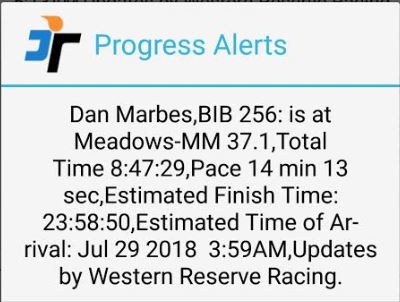
Around this time I was starting to feel that a bathroom break was imminent. I made the decision that I was going to push towards the aid station just ahead since I’d already be taking a break for foot care. I didn’t want to add another 5-10 minute stop if I could find a place before then. That stretch of the final two miles coming into the Meadows aid station got progressively more uncomfortable as the call of nature got more insistent, but I was able to push through and reached the aid station at 12:47 PM. This was 47 minutes behind what I had on the pacing plan, but I’d only lost 5 minutes against the plan since Egbert, so I was still feeling pretty good.

Meadows-RaceJoy

I came into the main aid station area, gave my pack to the volunteer to top off , and found my wife set up with our gear. I got confirmation that there were restrooms at this aid station but they were a few minute walk (and not in the direction that I’d be going for the rest of the race). After checking on my feet (they looked awesome!) I applied another coating of Foot Glide, put on fresh socks, changed my shirt, and then had a brief internal debate about whether to “backtrack” the 3 minutes to the restroom. Seriously. As I mentioned above, the mental game in these long events is a funny thing. I’d spent the better part of the last 30 minutes dealing with all sorts of unpleasant sensations and yet I was worried about losing time. After mulling it over, I decided that the smart decision was to walk however far it was to the toilet and then feel better leaving this aid station.

37965987_1069166323233738_149669139135332352_o

After grabbing some food and caffeine, I headed out for the final stretch of the first 50 miles. The next place that crew were allowed was at the 50 mile marker.

Meadows to Boston Mills (mile 37.4-50.1)

The section right after the Meadows aid station was a relatively quick two miles to the Oak Grove aid station on bridle trails. We’d been told at the start of the race that there was the possibility of seeing horses on the trail since these were open, public areas. If we came across horses, we were to stop and let them pass for our safety. Apparently horses don’t much care for things which smell like death. Can’t blame them I guess. This stretch was the first place I saw any horse riders on the course and I needed to briefly stop to let them pass.

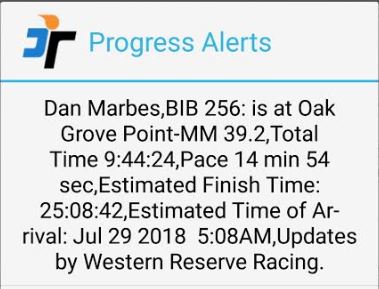
The Oak Grove aid station was busier than I expected for a no-crew station but this was due to it being an exchange point for the 8-person relay teams. About an hour had elapsed since I rolled into the previous aid station but I had only been running for about 20-25 minutes. Much of that additional time was the potty break and foot care. Since I had just filled up, I ran by the Oak Grove aid station and began the 5.6 mile journey to the Snowville aid station.

Oak Grove - RaceJoy

I found the course up to this point to be really manageable and was still feeling good about everything. The section from Oak Grove to Boston Mills did its best to make up for that with single track trails, long climbs and other craziness.

I knew that with 50+ miles ahead the key was to manage my heart rate but still move with a purpose. Things went well for about the first hour after Oak Grove. I was managing pace well and feeling pretty good. Then at some point around 2:45 or 3:00 I ran out of water. I’d underestimated how much I’d consumed between Meadows and Oak Grove and made a mistake in not stopping there to top off. I was forced to back off the pace a little while navigating the steep climbs and technical terrain. I kept moving forward, wishing the relay racers who were passing me good luck, and focusing on forward progress, knowing that I’d eventually reach Snowville.

It felt like forever until the Snowville aid station appeared on the horizon and I’ve never been more grateful to see a food tent. The volunteers filled up my pack with ice water and while I was waiting I grabbed a can of ice-cold Mountain Dew and a PBJ sandwich. I don’t think I’ve ever eaten something so delicious! I spent a few minutes there and put down a second can of Dew to get some fast acting sugars into my system to try making up for being behind schedule with calorie intake.

snowville-racejoy

Somewhat surprisingly I’d only dropped 15 minutes off my planned pace and was now 90 minutes off that plan even with the water drama. During the race I wasn’t paying much attention to this comparison, as I knew my estimates were a wild guess at best.

The five-mile push to the Boston Mills station was more single track, though the inclines seemed a little less intense than the previous section. Whether that’s because I found new life in a can of Mountain Dew or because it was actually a little less technical I don’t really remember. I did notice for the first time, however, at around mile 48 that my legs were feeling tired and that even on the flats it was hard to maintain a decent pace.

There were some sections of the course that offered a different challenge, like these stairs at around mile 49.

Stairsat 49

At 5:14 PM I pulled into the Boston Mills aid station. There was a lot of buzz at the aid station as the runners were getting ready for the start of the “back 50” mile race at 6:00 PM.

BosMills-RaceJoy

My wife was ready with the chair and supplies per our plan. As I sat down to give my feet a few minutes rest, I asked my wife to give me a sanity check on what I’d been thinking for the last two miles. With my pace slowing and word from other runners that the course over the back 50 miles was more technical and challenging than the front 50, I had concerns about making it to the finish line in the remaining time. After the DNF at the Spartan NJ Ultra, the DNF at the IAT50, and tapping out early at the Titletown Ultra in June, I didn’t want to add yet another DNF to this year’s resume. Conversely, I wanted to make absolutely sure that I wasn’t just letting the physical and mental demand of this event win and electing to take what some might consider the easy exit.

The Burning River 100 is one of very few races that I’ve seen which offers 100 mile racers the option to drop at the half-way point and record an official 50 mile finish. Had this option not been available and it was “all or nothing” I’d likely have pressed on, but after several minutes of conversation and weighing options I decided that on this day 50 miles was enough and I would celebrate the success of completing my first 50 mile distance knowing that my gear, hydration, nutrition and foot care plans had been more successful than any event this year and that I’d come back next year better trained to conquer the full 100 mile distance. I verified that I had completed this portion of the course within the allowed time and told the race directors what I had decided. To their credit they made sure that this was really what I wanted to do before accepting my bib and moving me to the 50 mile race.

Epilogue

A month removed from the event (when I’m finally writing this), I still think it was the right decision to call it a day at 50 miles and celebrate all that went well. I’m confident I could have made it somewhere into the high 80 or low 90 mile portion of this race, but I’m pretty sure that a DNF at the 30-hour mark would have hit me hard. Even though I felt pretty good right after some of the earlier DNFs this season I found that in the weeks that followed I was subconsciously beating myself up over them and I was just somewhat “down” from early May until this race.

Ultimately, this year’s schedule was all about experimenting with different distances and course types to understand if ultra running was something I really wanted to pursue. So in the end, what did I learn?

  • Trying to run these distances from fifty to one hundred miles in a single event is hard and there’s no way around that.
  • The ultrarunning community, very much like the OCR community, is filled with wonderful people who set up and staff these events in addition to those who race them. In this sport, it’s really you against the course and not you against the other runners.
  • These events pose many challenges (physical, mental, and logistical) and all of them need to be solved to have a successful day.
  • Even on days when your best isn’t good enough, there’s something incredibly rewarding about knowing you pushed as hard as you could.
  • When you fail, you need to study those events to determine what went wrong and understand how you’re going to adapt your training and/or race plan to avoid those issues in the next event.
  • While I’ve learned a ton this year which will help me in selecting and completing races in 2019, I have plenty of opportunity to grow and develop within this sport.

With all of the trail ultras behind me for 2018, I turn my focus back to a handful of 30 mile Spartan Race events before entering the off-season in late November. I’m definitely looking forward to returning to Burning River in 2019 in better condition and completing the full 100 miles.


Ice Age Trail 50 Mile Run

…in which Dan emerges heroic after his recent DNF in New Jersey and starts this year’s ultra trail running journey on a high note…

…or not.

After coming home from the Spartan Iceland event in December, I spent a lot of time trying to figure out what I wanted to accomplish in 2018 and how I would construct a schedule of events that would be more focused than 2017. My list of possible events for this year numbered almost 150 and from there I started to make some choices to come up with a final list that was challenging yet realistic and also fit within the budget guidelines I set for myself.

One of the big choices that I needed to make was determining if I wanted to focus on long distance running or on the rucking endurance style events. Both of these were new to me in 2017 and I knew that success in either would require dedicated training. I’m certain there are many athletes who can successfully manage competing in these events simultaneously but I don’t feel like I’m currently one of them. As I pick events which involve a legitimate chance of not finishing, I know it’s critical that I train for the specific demands they present. Looking back on 2017, my DNFs in the Spartan Endurance 12-hour Hurricane Heats were due in large part to not spending enough time moving under load with a ruck.

With hopes of building upon my experience at Mosquito Hill last year, I decided that I wanted to focus on ultra running. I built three key events into the schedule for this year: the Ice Age Trail 50 mile race (IAT50) on May 12, the Titletown Ultra (a 15.5 hour event on a 4.75 mile loop course) in Green Bay on June 30, and the Burning River 100 mile Endurance Run on July 28. This sequence offered me a ramp to the most difficult event with time to recover and train any discovered weaknesses.

Leading up to the IAT50 I spent time studying the map and I knew this was going to be a challenge. Setting aside the 50 mile distance, the race had a hard 12 hour time cap. If I was going to complete the race, there wouldn’t be a whole lot of time for walking. When tired I can maintain about a 17 minute mile but that is slower than the roughly 14:30 minimum required pace needed to complete the event. Pacing would be really important. I needed to log enough miles early to give me a cushion against the clock but not push so hard in the first section that I would blow up later in the race. I suppose this is a key in all ultra running but it’s the first time that it really struck me in advance of an event.

After the Tri-State Spartan Ultra DNF, I had two weeks to get ready for the IAT. I spent most of the first week recovering my trashed quads and the second week making sure I felt as ready as possible.

A few days out from the event, I started paying attention to the weather forecast. It looked as though it would be both cold (highs in the low 40s) and wet for much of the day. Not wanting to be chilled and soaked for 9+ hours, I decided that I would pack and use my lightest waterproof shell jacket. It had served me well in the Iceland training and during that race, keeping me warm and dry.

As a newbie to ultra racing, this was the first time that I needed to deal with multiple drop bags. In Spartan ultras, you’re allowed to have a drop bag that stays in the festival area which you can access between laps of the course. In the IAT50 we were allowed three drop bags! One would be available near the start line after completing the first nine miles, one would be available at an aid station on the 50 mile leg which we would visit at mile 17 and again at mile 26 and the final bag would be available at an aid station on the 50k leg which we would visit at mile 37 and 43.

Here’s what I decided to place in each:

Drop bag 1: Change of clothes for post-race, trail sunglasses, wide brim hat, a few gels and bars, headphones and iPod.

Drop bag 2: Dry shirt, change of socks, second hat, second hydration pack bladder pre-mixed with Gatorade Endurance blend, gels and bars. 1L water bottle.

Drop bag 3: Dry shirt, 1L water bottle, gels and bars.

When I arrived at the start area, there would be tarps for bags #2 and #3 which would be transported by the volunteers to the aid stations and at those aid stations there would be tarps to indicate that the bags could be returned to the finish line.

50M2

The morning of the race I got up around 4AM, ate some oatmeal and had some caffeine while getting dressed, double checked everything, packed up the suitcase, checked out of the hotel and headed to the start line around 5:00. With limited parking near the start line it seemed like a good idea to err on the side of being early.

I decided for the start that I would wear shorts, Merino wool socks, compression sleeves on my calves, a dri-fit shirt, the shell jacket and a wool beanie. I opted for the Saucony Peregrine 7 shoes that I first raced with in Iceland. They’re wide enough that my feet would have some room to expand if they swelled up, have good grip and have a little more cushion than the other shoes (Merrell All Out Crush Light) that I usually race in, which I figured was a decent idea for an event this long.

20180512_073728

As expected, it was chilly prior to the start with temps in the upper 30s but there were only some slight sprinkles, no real rain. Brr. I didn’t figure there was a lot to be gained with an extensive warm-up so I just focused on moving around enough to get loose.

About ten minutes prior to the start of the race, the race director gave a few announcements including recognition of runners attempting their 20th (or greater) IAT50 with one racer attempting #25. That’s an impressive feat and I thought a real testament to the condition that a person can maintain as they age. There was a nice rendition of the Star Spangled Banner and then with a ten-second countdown at 6:00, the race was underway!

I know based on my training that it takes me anywhere between 10-20 minutes to get really warmed up and on colder days it’ll be that long before I warm up enough that my fingers aren’t cold so the first few miles were focused simply on maintaining a comfortable pace and being courteous to other runners. Thankfully this first section of race is on a pretty wide section of trail, allowing for the pack to spread out and to avoid getting in each other’s way.

Most of the first section on the Nordic Trail felt pretty good. I was able to hold a 9:30 pace which is a pace that I was able to sustain in training and still keep my heart rate in the aerobic zone. There were a few hills that made more sense to hike (walk) than run to preserve energy for later in the course and a number of downhills that I was able to attack pretty aggressively. One of my major focuses for trail running this year is getting more comfortable on those downhills to avoid issues with cumulative quad fatigue similar to what happened in New Jersey and I really felt like this was working well.

As I worked through the section, I kept a running tally of time that I was “putting in the bank” against the minimum time cutoff, using 15:00 miles for easier math. If I completed a mile in less than 15 minutes, whatever that difference was went into the bank. It felt really good to be “making deposits” of roughly five minutes per mile in this early portion of the race.

The rain in the forecast for early morning never materialized. It was cool and breezy with some wet sections on the trail from the previous day’s rain, but we didn’t have to contend with any showers.

I noticed around mile 5 that I was getting warm so I took off the beanie. It was soaking wet. I also unzipped my shell jacket which helped me cool off a little. I didn’t think much else about it and kept on running. I made it back to the start line in roughly 1:36 and made a three minute stop to switch glasses, grab my wide brim hat, drop off my trash, and restock the gel and Clif pouch that I had consumed at hour 1. I was feeling pretty good at this point.

The second section of the race featured a repeat of the first mile before taking a turn towards the third aid station and then to Confusion Corner, the intersection that connects the 50 mile spur, 50k spur, and the Nordic Trail loop. I was glad that I had watched the video on the race’s website the night before explaining how this was laid out and there were some super helpful volunteers who helped all the runners make the correct turn. At this point we were on the Ice Age Trail and would be until the very end of the race when we returned to Confusion Corner for the third time and headed back towards the finish line on the final 2-3 miles of the course.

Shortly after making this turn the trail changed and there were frequent single track sections. Somewhere between mile 12 and mile 15 I noticed my pace was beginning to slow. Some of this was inevitable due to the more technical terrain but it felt like more than that. The miles just felt…harder…than I expected. I started wondering if I really hadn’t recovered from the New Jersey effort two weeks before but just as quickly brushed those thoughts away, telling myself to focus on the task at hand.

I made to the Highway 12 aid station at about 9:33 AM, about 40 minutes ahead of the cutoff. My wife Timberly was there and had located my second drop bag. The positive impact of seeing someone you know and care about in an event like this, especially when you’re struggling, cannot be overstated. I made another very quick three minute stop to simply replenish what I had eaten along the way. I planned to take advantage of the rest of that drop bag when I returned to the aid station. That would mark approximately the halfway point in the race. I did think about ditching the shell jacket but was a little worried about getting a chill, especially if (when) I needed to walk.

During the next section out to the Rice Lake aid station, I met the lead runners on their return leg. I’m always impressed by elite performance and this race was no different. The lead male runner flew past me looking like he was out on an easy afternoon jog, not looking like he was 23 miles into an endurance event.

Just before reaching the Rice Lake aid station, one of the volunteers waved and said “Hey! Mosquito Hill, right?” Turns out that it was the gentleman that took first place in that 24 hour event. How cool. I’m an absolute nobody in the sport and yet he recognized me. That was worth a big smile. I quickly said hi and gave him a high five as I headed the last half a mile to the Rice Lake aid station.

20180512_093253

Another smile awaited at the Rice Lake aid station as Timberly was there waving. I took two very quick minutes to get a couple glasses of water and I let her know I was struggling. I had brushed the back of my shorts with my hand in the last few miles and noticed they were soaked, seriously like I peed myself. It hit me that the shell jacket (which does not breathe….at all) was making me a lot warmer than I expected and was driving my heart rate up. I was sweating more than planned and was likely not replenishing fluids adequately. Thanks to the magic of Garmin Live Track, Timberly had been watching my pace and told me that my heart rate was way higher than she expected, spiking up to 178 bpm during portions just before and since Highway 12. Not good.

I still had about 30 minutes in the time bank but I was making some serious withdrawals from my gas tank to do it. Again I thought about ditching the shell but knowing I’d need to walk I was worried about getting cold. At this point I just needed to make it back to the drop bag at Highway 12.

I made it back there at 11:51AM, 26 minutes ahead of the cutoff. I lost the shell, put on a dry shirt, swapped hats, switched out hydration pack bladders, and downed about 1/2 a liter of water and some dark chocolate M&Ms. Knowing I was towards the back of the pack and likely wouldn’t see a ton of other runners I also grabbed my headphones (it’s horrible etiquette to be out on the trail and unaware of runners trying to pass you on narrow sections). It was time for some tunes. I thought about dry socks but didn’t want to lose the extra 3 minutes changing them. In hindsight this probably wasn’t the best idea. Merino wool is amazing but once it’s wet, it doesn’t dry all that fast and the constant exposure to water makes it more likely that you’re going to have foot troubles or blisters.

I noticed that the aid station was listed as mile 26.2 on the course map but showed up as 25.6 on my watch. This may not sound like a big deal but when you know you’re going to be racing with mere minutes to finish the event under the time cap, a half mile could represent anywhere from 5-10 minutes.

Feeling like a new person with a fresh shirt and some tunes, I was able to turn in an 11 minute mile from 27 to 28 and that was a huge confidence boost. After chipping away at the “time bank” since mile 10, I was finally giving myself some additional cushion. Without trying to push into the limited reserves I had left, I started working on catching up with other back of the pack runners that I came upon and passing them. It might seem silly but it helped me focus on something other than the pain in my joints and muscles.

Image result for turtle racing meme

I made it back through Confusion Corner and arrived at the Young Road aid station at 1:37 PM. After 7 1/2 hours of grinding away on the course, I had reached the 33 mile mark with 20 minutes to spare. Along the way I passed through the 50k mark and compared to my performance at the Hixon 50k in late October 2017 I traveled this distance roughly 30 minutes faster. I figured I just needed to keep grinding so I grabbed a quick cup of water and pressed on. I continued to note that the map mileage was a bit longer than what my watch was recording (at this point I was at 33.1 on the course map and 32.2 on my watch) and knew every little bit would help.

The section from here to the next aid station at Horserider’s Camp, where my third drop bag was located, pretty much broke me. Most of the terrain to this point included some minor hills, but this section had some challenging climbs. Some of them felt like 30-35% inclines or worse. Maybe they were or maybe I was just gassed but there were areas in here where I struggled to hold a 30 minute mile. I was positive my race was going to end at the next aid station but I kept pressing on. Barring injury I’ve told myself that quitting is unacceptable. It’s OK to fail, it’s OK to suck, it’s not OK to just give up.

Image result for never quit

I arrived at the Horserider’s Camp aid station (mile 37.2 on the map, mile 36.1 on the watch) at what I figured was 2-3 minutes after the cutoff time (and I had been mentally preparing for getting pulled here) but the volunteer said I’d made it by 5 minutes. I was equal parts excited and “oh shit”. It had taken me 1:18 to navigate the last four miles and I knew if I was going to have a chance, I needed to give myself as many advantages as I could. I grabbed my last dry shirt and the liter of water I had in the bag. I tossed the bag on the return tarp and after a six minute stop I got back on the trail.

I knew I needed to run when possible but my legs had nothing left. I walked as briskly as I could towards the Emma Carlin turnaround. I thought that if I could make it there, maybe I’d have a chance on all the downhills heading back into the finish line.

Unfortunately it wasn’t meant to be. About 1/4 mile from the aid station I ran into one of the volunteers who had started the course sweep and let me know that the timing mat had been pulled. I thanked him and made my way into the aid station and that was that. I was super grateful that it was an aid station with parking and that Timberly was already there. After thanking the volunteers for being there, I grabbed my post-race clothes and changed. We then drove back to retrieve the last drop bag and head for home.

20180512_155810(0).jpg

I can’t say enough about how well run the event was. The aid stations, volunteers, signage, start/finish area, website and generally everything about the event was top notch.

As much as it sucked to log a second consecutive DNF, I felt that I gave everything I had to give on the course and simply made a few mistakes that cost me the day.

The first and most significant was picking the wrong attire. The warmest day that I’d used the shell coat in training was around freezing and in those conditions it was warm with just a t-shirt underneath. I should have worn a long-sleeve thermal top and some gloves and then switched those out later in the day. Looking at my heart rate data from Confusion Corner (mile 11) to the second stop at the Highway 12 aid station (mile 26) I saw big chunks of time where I was at 155-175 bpm. Considering that the top of my aerobic zone is around 140 bpm I was fighting a losing battle. The elevated HR increased the rate at which my body consumed glycogen and there was no way I could eat back what I was burning or anything even close. If I believe the calculations from my watch, I burned 6500 calories on this run.

The second mistake was hydration and it was related to the heavy sweating caused by that shell jacket. Since Iceland I’ve been running my longer races with a Gatorade Endurance blend in my hydration pack. I figured that the extra sodium and potassium in that blend would serve me well.  In practice it hasn’t worked out very well for me. I’ve found that drinking it leaves me with a dry feeling and slightly sour taste in my mouth that makes me want to drink less. I also learned recently that it likely has an impact on digestion since each gram of carbohydrate ingested requires three grams of water to fully digest. It was amazing how much better I started to feel after drinking a full liter of water from mile 37 to mile 40. I think this also played a big part in not feeling any massive, crippling soreness after the race.

Capture.JPG

I think if I would have handled those things differently I would have finished but it ended up being a great learning experience and helped prep me for some of my upcoming events. Being a relative newbie at this ultra running thing, there’s going to be a lot of learning before I’m going to feel confident and can consistently avoid mistakes but if we only ever did what we’re good at, how would we grow?

Dont-Be-Afraid-To-Fail

I’ll be back in 2019 to improve my performance, finish all 50 miles and secure that finisher’s buckle. Along the way I certainly hope that the things I learned here allow me to be more successful in the list of endurance events I’ve got planned for the rest of this year.

2018 Spartan New Jersey Ultra

Spartan’s 2018 Tri-State Ultra event at the Mountain Creek resort was my first “big” race of the year. With the changes that Spartan announced in the recent off-season revamping the Ultra Beast into the Ultra, there was a lot of anticipation going into this event within the OCR community about just what this Ultra thing was going to be.

image-20180428_055045

I was looking forward to getting back on that course, the place where I earned my first Ultra Beast finisher buckle last year along with a group of racing friends from the Green Bay area.

When the map was released on Thursday before the event, it was interesting to see how the event was set up to meet the 30 mile requirement without forcing beast racers to do a full 15 miles on course (aside from Tahoe, it seems like Spartan likes to keep the beast at around the 13 mile distance). On the first lap at roughly mile 8 there was a split indicated on the course for ultra racers that would add a little more than three miles and three additional obstacles, making the first lap a total of roughly 16.5 miles and the second lap roughly 13.5.

The map also included one new obstacle: “The Armer”. There was wild speculation about whether this was a rig type obstacle that has been seen in European events or something else entirely. I joked that it was a typo and that the race director was going to ask us to carry an armoire up and down the hill.

NJ 2018 map

On Friday, my outbound flight ended up being delayed for roughly two hours due to aircraft maintenance which meant that I didn’t pick up my rental car until around 4:30 near the La Guardia airport. I’ve driven in a lot of traffic in my life but rush hour NYC traffic on a Friday afternoon is really something. Creeping along at 10-15 MPH through Manhattan and the Bronx, the traffic extended my planned hour and a half drive into nearly four hours.

Late last year, my wife and I decided to switch accommodations on these trips from hotels to house rentals through sites like AirBnB or HomeAway. It’s been a great switch for us as we typically get more space than a hotel room for the same money, especially if we rent a larger house and find other racers willing to split the cost, and we’ve been able to find places that are quiet and allow us to get a decent night’s rest. Additionally, it’s nice to save a few bucks on food by cooking in rather than dining out.

I made it to the house a little after 8:30 after stopping for some groceries and race supplies and got to spend a little time chatting with the other racers who took me up on an offer to split the house. Cool people all the way around. One was running the ultra and two were running the beast.

Race Day!

Having arrived in town well after the 6PM close of packet pick-up I knew I needed to be at the venue early to get my packet, drop my “bin” and be ready for the 6:15 age group start. I was really glad that I paid a little extra for the VIP parking which was the location of the registration area and right across the street from the venue.

Up at 3:45, dressed and out the door at 4:30. At parking at 4:50 and there was already a line of cars waiting to get into the VIP parking. I was glad to see that this year’s parking was all on the gravel portion of the parking area which eliminated the possibility that we’d end up getting the rental car stuck in the mud like last year! I got parked, got my packet and suited up.

I made my way into the venue and found a spot to drop my “bin”. To avoid extra expense and travel hassle I just use a duffel bag to hold the stuff I’ll need between laps. It fits well into the suitcase and is plenty big enough for what I need (water, food, spare shoes, and a place to store my jacket). Many racers had dropped their bins off the night before and even by 5:30 it was a hive of activity.

NJ drop bin

After all of the elite racers were in the starting area just before 6:00 I made my way close so I could hear the announcements given by the race director and officials. Regardless if I’m running in the age group or open category, I like hearing the information given to the elites as it details the distance of the course and any venue specific information.

During the elite briefing, it was revealed that “The Armer” was a carry obstacle that was an atlas ball with an attached handle. You needed to pick up one ball and walk a marked distance down and back. Since I’d done this in Tahoe (where we had to carry two) and in Las Vegas in March (one ball), I knew this was nothing to worry about. It was also revealed that both the Twister obstacle and the spear throw would not have burpee penalties for failure; there was a penalty loop that needed to be completed. While I was hoping to go two for two on the spear, I knew that announcement would likely save me some burpees on the Twister.

Beyond that, the staff confirmed the cut-off times. Racers needed to be out of the transition area by 2:00 PM and then there were two intermediate cut-offs on lap two before the final course closure at 9:00 PM. Knowing that we were starting on time, that gave me roughly 7:45 to complete the first loop and refuel for lap two. Spirits were high.

image-20180428_055146

At 6:15, I hit the course with the age group wave. Much like the 2017 version of this event, the first part of the course was uphill for a little over two miles with some easier obstacles along the way. As we climbed the mountain, the moisture in the air got thicker and thicker until it was a reasonably thick fog at the top in the roughly 50 degree air. In that first part, I was super pumped when I successfully completed the Tyrolean Traverse obstacle for (I think) only the second time. For most elite and age group racers, this is an automatic/throwaway obstacle. For me, less so. I’d been using a technique where you hook your heels over the rope and then drag yourself along until you complete it. In most of my previous attempts my foot position would shift and then I’d fall off. Prior to this race I spent some time practicing a more “proper” technique where you keep moving and alternating foot position and it paid off. I didn’t set any speed records on it but I never felt like I was going to fall off. Spirits were high.

The next obstacle was Bender. This was the obstacle that I was most mentally invested in along this course. During last year’s Ultra Beast event at this venue, I spent probably 15 minutes trying to get over Bender on lap one before admitting defeat and knocking out the required 30 burpees. That wasn’t so bad but on lap two, I had one of my least proud Spartan moments and simply walked by the obstacle without attempting it (or doing the burpees). That moment has stuck with me for over a year and I was determined that no matter what happened I was going to do this race by the rules, with any and all earned penalties. After completing the obstacle without much difficulty, I smiled, and I knew that demon was behind me. While (again) this is a throwaway obstacle for many seasoned racers, it’s something that I’ve struggled with since it made it’s way onto the course last year. Spirits were high.

Image result for spartan bender

Up next was Olympus. After only completing this once in 2017, I decided to build an adjustable version of it in my garage so I could figure out the technique. I felt like I had a pretty good shot at this one but with the muddy ground leading up to it I was unable to keep my feet in the position I had practiced so I had to attempt it with my knees on the wall. I hadn’t practiced that and ultimately failed the obstacle but I was able to hang on for well over 30 seconds as I attempted to move my grip. It’s certainly the best failure I’ve had and know now that I need to spend time practicing that position so I’m ready if I come up to this one at future races and it’s wet and slippery. Spirits were still high.

Image result for spartan olympus new jersey

During the next stage of the race, we were mostly descending and heading back towards the festival area to take on the rolling mud/dunk wall/slip wall combo. I noticed that I wasn’t able to run down the hill as quickly as I would have liked and was doing a lot more “pumping the brakes” to keep under control. If you’ve not spent a lot of time trail running, the concern here is less that you’re losing time but rather that trying to slow down on a downhill puts a tremendous strain on the quads. I was thankful to get to the bottom and since the water station here was the only place on the course we were allowed to fill up our packs, I took a few minutes to top off. Spirits still mostly high, though I had to fight off a low patch on that descent.

We continued up the course, completing the barbed wire (mostly high enough to crawl under so no need to roll…woot!), the Armer and then over the A-Frame cargo net.

The next obstacle was the Z-wall. Seems that the 2018 version of the obstacle is like what used to be only at stadium races with the middle of the wall missing. Also the outside corner has a pretty consistently long reach. That outside corner is a nemesis and while trying to get my hand on the grip block, my foot slipped off. 30 burpees. I knocked those out and kept moving.

Image result for spartan z wall

At Twister, there was a bit of congestion with lines of racers 2-3 deep waiting to attempt it. Since I knew I wouldn’t be able to complete it, I immediately started on the penalty loop which was a section of trail that took me roughly three minutes to complete. It was nice to avoid the burpees.

At the monkey bars, I slipped off and had to knock out another 30 burpees. It was at about this time that I noticed a bit of stomach distress. Nothing crazy but it’s the first time that I’ve gotten any sort of sour stomach at all during an event. I forged on hoping that would fix itself but being mindful of how much water I drank to avoid worsening it.

The bucket carry was the final obstacle before the split onto the ultra spur. Spartan’s change this year to have all of the buckets pre-filled is nice and saves a few minutes plus offers some additional options for carries. I also think that the men’s buckets are a bit lighter this year than the “fill your own” style from 2017 and before. I was able to blast through this fairly quickly without needing to set it down.

I reached the intersection that marked that start of the ultra spur at just after mile 8 on my watch. The first part of this was a relatively flat trail run and I wonder if the course designers did this intentionally to lull us into a false sense of hope about this additional mileage. The first obstacle, the low crawl, was pretty easy and didn’t actually require us to crawl. Very similar to the stadium version of the obstacle, this was simply some cord strung from trees across the path at about waist height.

Somewhere around here, my watch hit the ten mile mark. I had been out on the course for roughly four hours at that point and I thought that if I could maintain that pace, which seemed reasonable as I had failed several obstacles and lost time to penalties, that I’d be on pace to onto the second lap in under seven hours, about 30-45 minutes ahead of the cut-off. It seemed like I was on pace to complete the course in roughly twelve hours, a full hour ahead of my goal pace. My stomach still seemed a little fussy and I was having to be careful but it was manageable.

The trail began to change and we ended up doing a lot of bushwhacking, which is essentially making your way through terrain that doesn’t have any clearly marked trail. The elite and age group runners who had gone through first had left me something to follow but I was being careful to avoid a bad step onto a leaf covered rock that would result in a twisted ankle. Through this section of the course, there was also a fair amount of technical downhill terrain and this is where my race started to break down. Downhill running, especially on technical terrain, is a big weakness in my game.

Coming into this weekend, I hadn’t had a chance to get out on any of the more challenging trails at home due to persistent snow and ice and even though I had practiced a TON of climbing at inclines from 15-30% on the treadmill it’s really no substitute for the demand that trail and downhill running place on the body. As the minutes ticked by and I kept having to pump the brakes to control my descent (and feel my quads continue to fatigue and tighten), I first started to think that I might be in trouble.

After the sled obstacle and a brief water station stop, we began a long and grueling climb which lasted almost until the end of the spur. After completing the 8′ wall and re-joining the beast racers I was able to run past the first memory test station (and chuckle again as it’s one of the only obstacles I have never failed), and then complete the hurdles. We continued to descend towards the spear throw and my quads just kept getting tighter and tighter.

At the spear, I made a dumb mental error in not noticing that the spear targets were notably closer than they usually are. I use an underhand throwing technique, much like tossing a pitchfork into a hay bale, which has resulted in a roughly 75% success rate rather than overhand which was more like 10%. However, none of that matters when you throw the spear OVER the target. Uugh. I looked at the penalty loop which was probably a 35% incline up a nearby hill and back down and began slogging through it.

I was able to smile a little watching one of my new friends from the house hit her spear though. I found out later that she finished in the top 10 in her age group and I was super pumped for her.

As we made our way towards the sandbag, there were plenty of areas that were relatively flat which I should have been able to run but I just couldn’t get my legs to do much more than shuffle along… kinda like that horrible zombie death shuffle you often see people rocking out in the last few miles of their first marathon. The realist in me started to wonder if I could complete the second lap of the course, even if I did make the 2:00 cut-off out of the transition area. I tried as much as I could to shut that down and just focus on the course in front of me but the downhills, even relatively gentle ones, were rough and my quads felt like someone was applying an electrical charge.

Just about as I made it to the sandbag carry, a guy flew by me and I noticed that he was wearing a white pinnie. Holy shit, I had just been lapped by the first place elite Ultra runner. It’s awe inspiring to witness that level of athletic ability. He went on to finish the race in 6:21.

The sandbag, as many racers commented, was brutal. We began with a long and gradual descent and then looped around for a long climb back up the path. Other than when I filled up my pack, this was the only time on the course when I stopped moving and it was primarily to let my stomach issues (which had resurfaced) chill out for a few minutes.

Sandbag

After the sandbag, there was another long climb. Very little of this course was super steep but the demand was constant. The next obstacle was the 7′ wall. This is another one of the “gimme” obstacles for most people who run OCR and usually it’s no issue for me but I honestly wasn’t sure what my quad/hamstring/calf would do as I hooked it over the top of the wall. Thankfully it didn’t seize up and I was on my way. I soon ended up at the top of one of the ski runs where the vertical cargo net was located. Words cannot express the joy I felt that this was the standard version and not the “2.0” setup I’d seen in Vegas with the Irish table component in front of it. I wasn’t sure that I would have been able to muster enough jump to get onto it.

As I worked my way back towards the festival area, it was obvious that I wasn’t going to make it out onto the second lap before the cut-off. While I was able to accept that, I told myself that until someone told me I missed the time hack I was still going to do every obstacle and penalty that I earned. The Herc Hoist was no problem even though the bags seemed a little heavier than normal, probably from all the rain earlier in the week.

As I hobbled down into the final gauntlet, I asked a volunteer what the time was and he told me I missed the cut-off. With that my race was over so I bypassed the multi-rig and rope climb and got my timing chip cut off, ending my race and hopes of earning that rad buckle. While the result was disappointing, I was happy with my effort overall. I showed improvement on a few of the obstacles that have given me problems, and I learned a few things.

After a bit of reflection…and some food….and a shower, here’s what I’m taking away from this event.

  1. While foundational skills and fitness are important, training specificity is critical. I could tell that the lack of technical trail running and downhill running practice in the first part of the year cost me dearly as my quads could “fake it” until around mile 11 but after that I was in a world of hurt.
  2. Sometimes, stuff just happens. I’ve never had digestive issues in any event that I’ve done, including two 24 hours events last year. Everything that I used to fuel myself during the race was stuff I’d used in training and had worked great. While I’ll likely revisit my race nutrition before the next event, it’s entirely possible it was just a fluke. I was glad that I worked through the issues as well as I could and that I did not quit on the race or any of the obstacles.
  3. It’s OK to fail. I’m a big believer in setting lofty goals that you might not reach on the first try. I reflected during the race that I certainly could have completed the beast course, even with leg and digestive issues, but I don’t know that doing so would have raised the bar for me. Like Ivan Drago professes late in the final fight in Rocky IV, I do this for me, not to accumulate medals and swag but to push myself to the best athlete I can possibly be. If I don’t occasionally find the limits, how will I figure out how to push past them?
  4. The people that do this stuff are all crazy, but they’re tremendous. I made new friends this weekend and I think it says something about the sport when people who have never met in person and simply decided to pool resources to reduce housing costs can sit down after a race and talk for hours. I draw so much energy from being around people trying to be the best versions of themselves.

With the race season now officially underway, I’ve got two weeks to heal up and prepare for the Ice Age 50 mile trail run. Not sure what will happen, but I’m reasonably sure I can avoid burpees in that one!

(For those paying close attention, the pics of Bender, Olympus and the Z Wall were not actually from this event. I added them as a visual reference for those readers who are less familiar with Spartan Race.)

On running 24 hours…

On August 5, 2017, I had the opportunity to take on my first-ever 24-hour race event. In a year-long race schedule primarily focused on obstacle course races, this was one of the very few pure running events that I signed up for.

The event took place at the Mosquito Hill Nature Center in New London, WI. Rather than a traditional race event that involves runners going from the start line at point A to the finish line at point B, this event was constructed using a 5k loop at the venue. Racers had 24 hours to complete as many laps as possible.

18320694_985389191596834_3120877324351838803_o

One of the questions that I got asked prior to the event (or I could sense that people wanted to ask but didn’t for whatever reason) was simply “why?” or “what would possess you to do this?”.

In late 2016, I found that I really enjoyed longer distance events. I think it was probably during the Spartan Killington Beast in which I covered 14.5 miles and something like 6000′ of elevation in about 8 hours that I found I really enjoyed “the grind”. There’s something really fulfilling in pushing yourself hard and redefining what you thought possible. In November 2016, I finished a local 29-mile trail run with a decent time (something like 6 1/2 hours) and I knew that for sure I wanted to get a 50k or better on the schedule in 2017.

When the Mosquito Hill event popped up, I found myself thinking that it would be a really interesting test. Could I grind for that length of time without stopping? What kind of mileage could I log? It looked like August would be a pretty light month in terms of OCR scheduling, so why not give this a try.

As summer started, the event became even more relevant after I signed up for the Spartan Ultra World Championship race, a 24-hour OCR event. In Iceland. In December. I knew that I needed a trial run to make sure that I knew how my body would react in a long event and that I had a chance to test out hydration/nutrition in a 12+ hour timeframe.

Beyond the tactical reasons for signing up for Mosquito Hill, part of the why is tied into my reason for doing OCR this year. I grew up being ashamed of my body. All throughout elementary, middle and high school I was a fat kid with no athletic ability. I can still remember PE classes from elementary school and my inability to do really anything. As part of my continuing fitness journey that started in 2013, I feel I have something to prove to myself.

So, the “why” ended up being a combination of: “It’s hard. Go out and push the limits. Redefine what 100% is for you.” and “I don’t know if I can complete this, but better to try and fail than to be too scared to try.”

PREPARATION

In the months leading up to Mosquito Hill, I reviewed several websites and articles about approaches on training for an event like this. Most of what I saw seemed similar to training for a marathon or other long fixed distance race, with training mileage gradually increasing and then a taper into the event. I’d done something similar earlier in the year when I followed a 50k training plan in preparation for the Spartan Tri-State Ultra Beast race in New Jersey.

Knowing that I had some challenging OCR events in the month before that race, doing a full training/prep plan specific to this race wasn’t really feasible. Also, much of June was spent rehabbing a significant ankle sprain that I suffered on Memorial Day weekend. Much of the time in the weeks leading up to the race was spent focusing on OCR-specific training. Lots of inclines along with obstacle technique and relevant strength training. As odd as it may sound, Mosquito Hill wasn’t on my “A” race list. Those honors were bestowed on the two Ultra Beast races on the calendar in September (Vermont and Tahoe).

I did get a chance to see the venue three weeks before the event when I drove out and ran about nine miles, trying to make sure I saw most of the trails that were part of the race’s 5k loop. The trail on Mosquito Hill itself has one steep incline section, roughly a 17% grade for about 2/10 of a mile and about 250′ of climb and it was good to experience that. It also helped to know that I’d be running on grass, wood chips, dirt, crushed gravel and bit of pavement throughout the lap.

19731820_1026229247512828_291787634003568492_n

In the weeks before the event, I started to think about goals for the race. Truthfully, when you’re attempting something that’s so far outside anything you’ve ever done before it’s hard to do much more than throw a dart at the wall and hope it’s close. Besides the standing agreement with my wife that the first two goals are always “don’t die” and “don’t get seriously injured,” I settled on three objectives for the race:

  • Finish the event. To me this meant I needed to be moving/making progress at the 24-hour mark and not quitting. While I had success at the Spartan Tri-State Ultra Beast, completing the course in roughly 12 1/2 hours, the two other Spartan endurance events I participated in (12-hour Hurricane Heats) both broke me mentally, so this was not a goal I took lightly.
  • Apart from whatever short breaks I needed to reload supplies and refuel, no extended stops.
  • Complete 80 miles. I figured that if I maintained a 3.0 mph walking pace for 24 hours that would net me just over 70 miles and I knew that I would be able to get some additional running miles in at the beginning while I was fresh. This distance goal seemed challenging as I would require me to maintain a consistent pace with few to no breaks but at the same time, was achievable.

There was some additional significance to 80. Shortly before the race my dad was diagnosed with bladder cancer and while the operation he had to remove the cancerous tissue was successful he had to start chemotherapy in July to prepare for an additional operation later in the year. He’s got a tremendous attitude and outlook on the situation and is determined to fight through it. I figured if he could be tough enough at age 80 to keep fighting, I could summon the willpower to fight through to 80 miles. Endurance athletes often talk about having a “why” that’s bigger than yourself so this went into my mental arsenal for the race.

The weekend before the race I ran the Savage Race event near Chicago twice. I like shiny things and completing the second lap entitled me to the Savage Syndicate medal. It’s big, it’s shiny and the middle of it spins. No brainer. In total, this was just under 13 miles of running on relatively flat ground plus about 50 total obstacles. The next day I hit the streets for just under 10 miles to get some miles on tired legs. That felt pretty good overall even if running the last 1.5 miles carrying a dozen eggs home from the convenience store was a little weird. Hashtag runner’s life…

The week before the race I tapered down with three miles on Tuesday, two on Wednesday and took the rest of the week off to rest up. I didn’t really change anything up with respect to nutrition in the week before the event. I’m not a big believer in “carbing up” or doing anything weird.

The day of the event was spent prepping my drop bin. I used an 18-gallon plastic tote for the race to hold all my stuff. The fun part about doing something that’s way outside what you’ve ever done before is that you’re really just guessing about what to pack. The tote contained:

  • Two spare short sleeve dri-fit shirts
  • One long sleeve dri-fit shirt (in case the bugs started biting after dark)
  • Spare shorts and underwear
  • Track pants (in case it got chilly or the bugs were bad)
  • Extra compression socks
  • Second pair of shoes
  • Wide brim hat with mosquito netting
  • Bug spray
  • Sunscreen
  • Anti-chafing spray
  • Small first aid kit
  • 5 32oz. Gatorades
  • 4 8oz Red Bulls
  • 4 16 oz. water bottles
  • Hammer Endurolytes
  • Assorted Clif Bars
  • Clif Sweet Potato Pouches
  • Several assorted single serve bags of M&Ms
  • Beet Elite
  • Primary and spare headlamp with batteries
  • Chem-lights/glow sticks
  • Charging cables for phone and watch plus external battery pack
  • iPod and headphones

Additionally, I had my hydration pack with 2L bladder (water only) and a bag with some clothes to change into after the race.

Like pretty much all the other trail or OCR events I’ve done, my running gear was pretty simple. Dri-fit short sleeve shirt, dri-fit shorts and undies, compression socks and trail shoes. I chose my New Balance 910v3 shoes for this run since I didn’t need a super aggressive tread, they were well broken in and they had a bit more cushion than some of the OCR shoes I wear.

I arrived at the venue around 3:20 PM and got checked in. There were a total of 17 racers in the 24-hour division. I could place my bin in an area close to the start line. We had our pre-race briefing at 3:45 and were instructed that we needed to check in with the race staff after each lap since we were not using chip timer. Just walk up to the official tent and make sure they got your bib. We were also told that we would be running every other lap in the opposite direction. Run a lap, check in and go back out the way you came. Easy enough. As of 2:30 the following afternoon all runners starting laps would be sent out in one direction to make it easy for the “sweepers” to ensure the course was clear at the end of the event. We had until 3:15 to start our final lap. We were reminded that the 50k and 25k racers would be starting at 6:00 the next morning and the 10k racers would start at 7:00. Both groups would follow the same alternating direction plan that we would. Several of the racers set up tents and the last instruction that we got was just to let the race staff know if/when you were taking a break. Racers were free to stop for a while to sleep or leave the venue entirely. You simply had to be back in the race at the conclusion to be considered a finisher.

20690358_1046980552104364_4062574953822875014_o

We decided that we wanted to start in the direction with that steep incline and with that…5…4…3…2…1…

20626869_1045098445625908_4603175797310280689_o.jpg

AND WE’RE OFF!: 4:00 PM – 8:00 PM

The race started off really well. My body felt good and outside of the big incline I could run pretty much all of the first two laps. I knew from experience that trying to run the incline didn’t make any sense. It takes way less energy to power hike it and it’s almost as fast. The course was pretty much like I remembered it from the training run a few weeks before and that gave me a real sense of confidence. As I very often do on long runs I put one earbud in and started working through the backlog of podcasts I brought with me. I generally avoid music when running, mostly since I can’t help running to the beat of whatever’s playing and those changes in cadence can get awkward.

My plan on course was to sip enough water to stave off dry mouth, swishing it around to avoid drinking too much and then getting bloated. I would eat about every hour, taking in 200-300 calories plus electrolyte caps to maintain that balance. That plan worked well for me in previous longer events and allows me to eat a Clif bar or a sweet potato pouch which I can get down quickly. As I finished each lap I would put any wrappers into the bin (for later logging and calorie counts), grab replacements if needed and a swig of Gatorade if I wanted it.

I finished lap #5 around 7:30 PM and grabbed my headlamp. I was still feeling pretty good as I headed out for #6.

DARKNESS SETTLES IN: 8:00 PM – 11:00 PM

It’s impressive how quickly dusk gives way to the pitch blackness of night, especially in wooded areas. With the headlamp on, I was still making decent time. There was a stretch of trail on top of the hill which had a fair number of roots sticking up so I decided to walk that section while it was dark to avoid tripping and falling. Taking a tumble on the trail isn’t uncommon for me as I tend to not pick up my feet when I’m tired and I didn’t want to risk injury or just the discomfort of a stubbed toe with 16 hours to go.

As it got dark, I noticed that my headlamp wasn’t really all that bright. I hadn’t changed out the batteries prior to the race so I thought that was just a dumb mistake. It was enough light to see but it was nothing compared to some of the lights the other runners brought. At the next bin stop I swapped lights and the backup seemed a little brighter.

Once I was back out on the trail, it was still hard to see. I realized that my headlamp just sucked compared to some of the other racers’ gear and that my sad little beam of LCD light was as good as it was going to get. I think this was the catalyst for the worst round of negative self-talk that I have ever experienced. It’s not all that rare for me to get into my head when things start getting hard and in a typical long run this might last a mile or so, no longer than 20 minutes. Five hours into the race with about 20 miles under my belt, I started a fight with myself that lasted nearly two hours. I’ll spare you all the gory details but it was ugly, and here’s the kicker. The last two times that this negative self-talk has kicked up in the wee hours has been during Spartan 12-hour Hurricane Heat events and both times that negative self-talk won after I gave up and quit those events.

Somewhere around 11:00 I pretty much said, “You know what. I committed to this. I may not make it to the finish line, I may not hit the goal I set, but I am NOT going to stop simply because this is hard, because I’m tired and because I’m uncomfortable. I cannot, I will not allow myself to be a quitter.” And that was pretty much that.

I GO WALKING (IN THE MIDDLE OF THE NIGHT): 11:00 PM – 5:30 AM

Part of overcoming the mind games was just accepting that I wasn’t going to make great time in the darkness with my headlamp setup. I knew that I was going to be walking almost all the course until the sun came back. I just told myself that I was going to move with purpose and make the best time that I could under the circumstances. I was able to jog some of the downhills to take advantage of that terrain, but it was slow going.

At about 11:30 PM I passed 30 miles, making this the longest distance I had ever covered in a race. This was also a big help in establishing a positive mindset. At this point every mile, every step was a PR. If I could keep moving I was redefining what was possible.

I spent most of the overnight hours enjoying the audiobook version of Dean Karnazes’ Ultramarathon Man. Not only is that a great book, it seemed totally appropriate given the circumstances. Fueled by a great story, a few Red Bulls and the other grub in my drop bin, I forged on.

During the overnight hours, I took my only breaks. I stopped at the bin twice for about five minutes each time to stretch out my lower back.

Around 2:00 AM it struck me that I wasn’t seeing as many headlamps on the trails as I had earlier. When I checked in on the next lap, the race staff said that seven of the racers had opted to take a break. When I peeked at the clipboard I saw that I was maintaining pace with many of the other runners! This was another huge boost.

As the halfway point approached, I knew that my watch and phone were probably running low on juice. Since I was walking anyway it wasn’t a big deal to spend the next two laps getting them charged up. I love my Garmin Fenix 3 HR’s ability to charge on the go. I lose the heart rate data but since I wasn’t going full out it wasn’t all that important. I just wanted to maintain the cumulative mileage, time and elevation data.

20638740_1046979758771110_1459865290322329487_n

DAYBREAK AND NEW FRIENDS: 5:30 AM – 12:00 PM

At roughly 5:30 it was bright enough to see without the headlamp, at least in the open areas, and that was awesome. I made it back to the bin around 6:00 AM with 16 laps completed and tossed the headlamp and the array of charging cables into the bin. I let the 50k and 25k racers take off and then headed out after them. I had done some quick math and figured out that my 80-mile goal was achievable but it was going to require more running. At this point I needed an extra boost so I threw on some tunes to keep me going. Good tunes are like the nitro button for me. Since I don’t rely on them all the time, they’re a big help when I do use them.

Somewhere around this time I realized that I had most likely broken open a blister under the ball of my left foot. It wasn’t totally unexpected and I didn’t figure that continuing to run on it was going to cause any real damage, just some discomfort. Thankfully it wasn’t too painful and I forged ahead with some ibuprofen and Tylenol as new allies in the fight to finish.

I saw most of the 10k racers take off at 7:00 as I came in from lap 17. During this transition, I needed to fill up my hydration pack and looked at the food on the aid station. I took advantage of some chocolate chip zucchini bread (omg, soooo good) and some Mountain Dew. By this point I’d gotten a little sick of Clif bars, pouches and Gatorade and the caffeine helped a little. So did a fresh, dry shirt. I was glad I brought the spare.

20170806_052028.jpg

I SEE TREES OF GREEN: 12:00 PM – 3:15 PM

By noon I had completed 22 laps and the race staff told me that I was in second place in the 24-hour division! I knew I was a little tired but overall was feeling pretty good, you know…all things considered. My “run” had slowed to maybe a 15-minute mile pace but I was still pushing to the best of my ability. I knew that I could probably walk till 4:00 and still hit my goal but I was now motivated to finish well. I tried to keep my time between laps as short as possible but still grabbed more Z bread and Dew.

By noon, most of the 10k and 25k runners had finished so there weren’t too many people on the trails, just some of the friendly faces I’d seen for 20+ hours.

Speaking of faces, around this time I started to notice that lots of the trees and rocks really looked like faces. Neat! Shortly after this I was running through the “swamp” section of the course and saw a wedding photo shoot. How cool, I thought! Upon getting closer it was just a tree stump that just looked like a guy in a tux bending over talking to a photographer with a soft box. Shortly after that I was pretty sure I saw a large bull mastiff jump across the trail and I thought “oh boy, I hope that dog’s owner can find him!” only to realize that there was no dog. It wasn’t a deer either. It simply wasn’t there. I’ve pulled all-nighters before in my IT career, but I don’t think I’ve ever had vivid hallucinations like that before. It was an odd realization, knowing that you’re seeing things that aren’t really there but not being able to do much about it.

20689768_1046985032103916_7219721675630607908_o

HOME STRETCH: 3:15 – 3:53 PM

I started lap 26 at roughly 2:45 PM and while it started out OK, I really started getting tired about half way through. Caffeine, adrenaline, zucchini bread, Clif bars and other assorted goodies got me to this point, but the last mile was really hard and I wondered if I was going to be able to make it up the hill one last time. Then a funny thing happened.

Just as I was about to the portion of the trail that goes up the hill on the switchback side I saw someone standing on the trail. It didn’t look like any of the racers so I thought it might be one of the race staff coming to check on me. Lo and behold it was my good friend, training partner and OCR buddy Matt! For just a second I thought he might be a hallucination but he was actually real which was a relief. He walked with me for the last portion of the last lap and was even kind enough to snap a few pics. His presence and the camaraderie gave me the energy to “run” that last half mile into the finish area where I was greeted by the other 24-hour racers and staff. I’ve never had a “pacer” before but I totally understand why people find value in having this support. I crossed the finish line at 3:53, having not only completed my goals of moving for the entire event and logging 80 miles but also finishing in second place in the 24-hour division!

Believe it or not, this is the first ever trophy I’ve received for an athletic pursuit. I’ve got plenty of finisher medals but I’ve never been on a podium. I was awarded a very nice wooden finisher’s medal, a wooden wall clock (given to all the 24 hours runners) and a jar of honey for my second-place finish.

IMG_0345

RACE STATS

Total official distance: 80.6 miles/130 km

Total distance on the watch: 78.85 miles (GPS skipped around a few times and the course must have been a tiny bit shy of a full 5k)

Total time: 23:53:32

Total moving time: 22:41:56 (I was really happy with this, averaging less than 3 minutes  “rest” between each lap)

Total elevation gain: 7,874 ft.

Total calories burned: 9,351

Total calories consumed: ~6,700

Average HR: 108 bpm

Max HR: 173 bpm

Total steps: 214,674

AFTERMATH: SUNDAY AFTERNOON

Once everyone gave high fives and wished each other well, I brought my gear to the car and grabbed my clean clothes.

The body’s ability to keep going under the most difficult of circumstances is amazing. Equally amazing is how fast it goes into shutdown/recovery mode once that task is done. I managed to shuffle into the restroom, strip out of everything except the compression socks and return to something that looked and smelled more like a human being than a wild animal. Not knowing the blister situation, I figured it was better to wait until I got home to address that. As sometimes happens, the cumulative demand on my body sends a signal that it’s time to throw up. Even though I had eaten a lot there was nothing in my stomach. In hindsight, I realized that taking the Mountain Dew from the aid station (something I did not use in training) may not have been the best idea. Even if it was, I probably shouldn’t have consumed the better part of a 2L bottle in the lap breaks between 7:00 AM and 2:00 PM.

Once I got home (by the way, driving 45 minutes after running 24 hours is a terrible idea), I had to have help cutting the compression socks off. As I suspected, I had a large blister on the bottom of my right foot which was unbroken and an even larger one on the ball of my left foot which had popped early in the morning. I also had some minor irritation on a few other toes and one toenail that looked like it was probably a goner. Soaking in the tub for 20 minutes never felt so good. I bandaged up the blisters and applied Neosporin where needed.

AFTERMATH: THE NEXT FEW WEEKS

The soreness over the next two days was brutal. I ended up having to take Monday off from work so I could just rest. Due to the blisters, I ended up walking on the outsides of my feet that day and that was wildly uncomfortable so I mostly stayed on the couch. I did manage to drag myself to cryotherapy even though getting into and out of the car was tough. That seemed to help a lot. I was way too sore to foam roll or do anything other than soak my feet to get the blisters healed up.

I went back to work on Tuesday but was still moving slowly, doing the tin soldier walk most of the day (walking on my heels) to avoid putting pressure on the blister sites. More cryo, more foot soaking.

Wednesday was a good day. While I was still stiff, I could walk normally and the worst of the muscle soreness had passed. Cryo and foot soaking followed both Wednesday and Thursday.

On Sunday, I got onto the treadmill and jogged just over a mile and walked a little without much discomfort. Monday, I got about a mile of incline walking in.

On Wednesday the 16th I felt well enough to go out on an easy run. It felt great for the first 3.5 miles and then I got some crazy tightness in my left quad/knee that immediately brought that run to an end.

By the end of the second week, there was still some lingering joint soreness and a sense that even though my legs felt decent, it was going to be a while before they were recovered enough to really run.

REFLECTIONS

Now a few weeks removed from the event and (mostly) recovered, I think I’m ready to reflect on the event and answer some questions for myself.

Was it a success? Definitely. I blew away my previous PRs for both race time and distance. Beyond that I battled through a terrible bout of negative head space and won. My nutrition and hydration plan worked well (except for the Mountain Dew and that’s an easy fix going forward).

Will I do this race again? Not sure. It was a great event that was well organized, well-staffed and I have nothing but positive things to say about it. The date for 2018 has already been posted. I simply haven’t figured out what my personal goals for 2018 are yet and if this fits into them. My gut feeling is that I’ll be back but probably not in 2018. There are so many new and unexplored challenges out there. I’d really like to look at completing a fixed distance ultramarathon next year, possibly a 50 mile or 100 km event if I can find one that works out.

Will I do a 24-hour event again? Yup, in just a few months if the Spartan Ultra World Championships actually comes to pass. With the addition of 20 obstacles per 5 mile lap the race plan/strategy will probably be a lot different, but I know I can go the distance time-wise. Looking ahead to 2018, much like figuring out if I’m going to do this event again, it’s really a matter of figuring out my personal goals. The Internet wisdom of allowing a month or more to full recover seems to be spot on, so there’s a question of how an event like this fits into the overall calendar.

20170806_194921